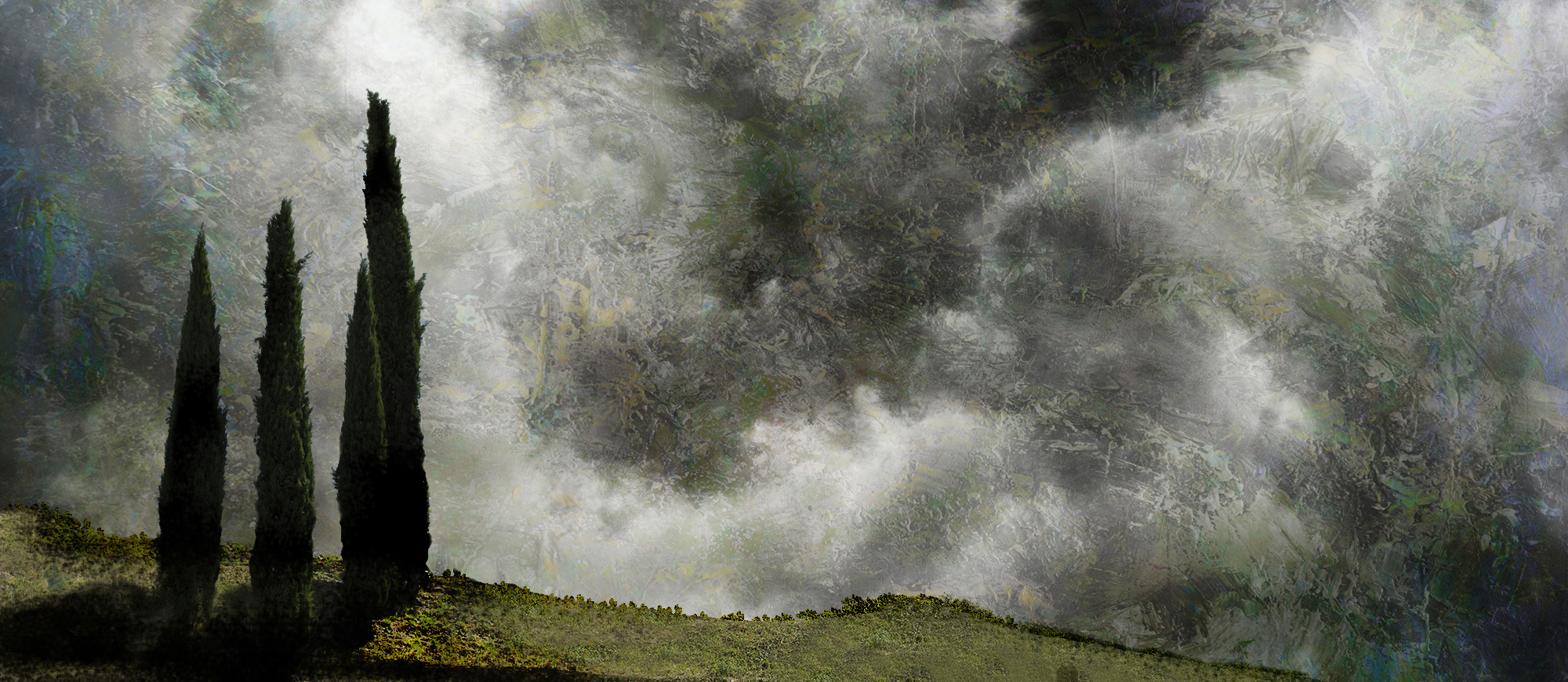
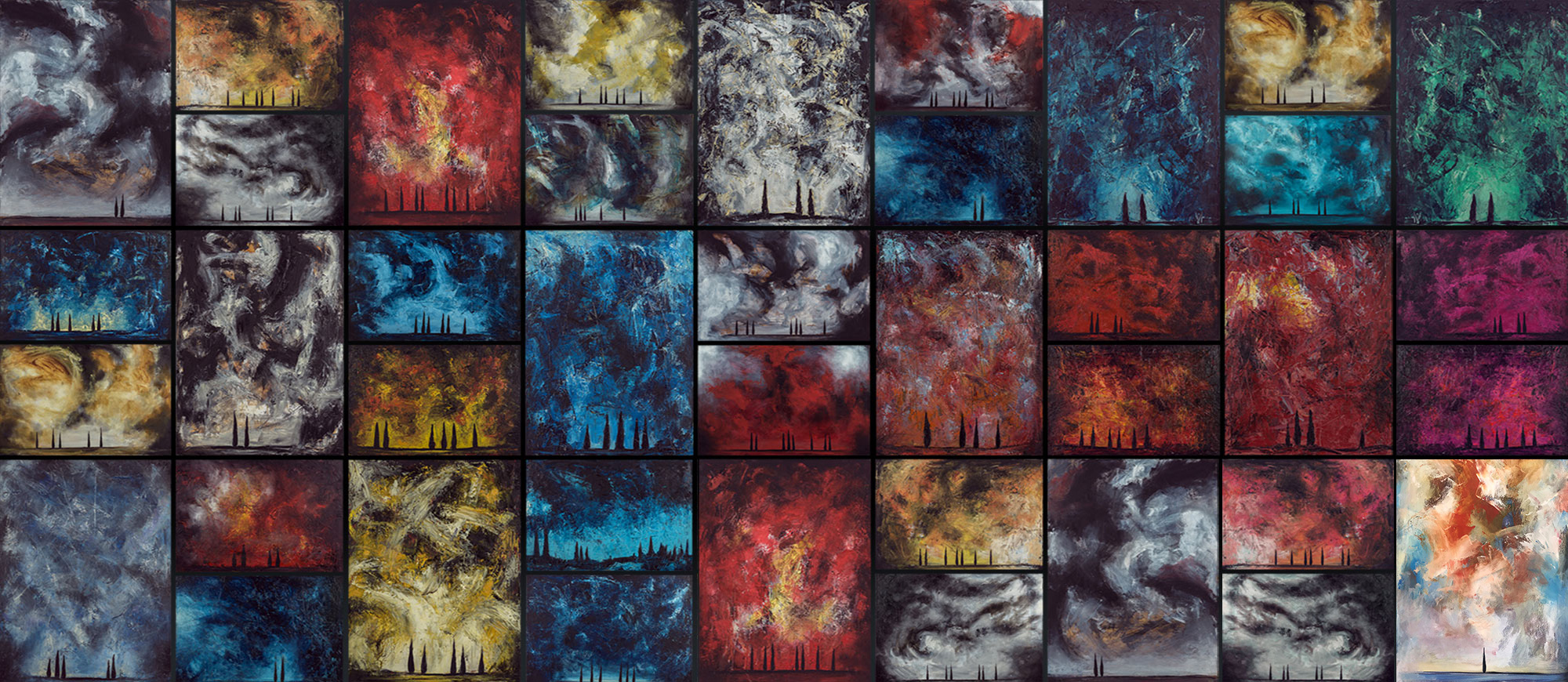
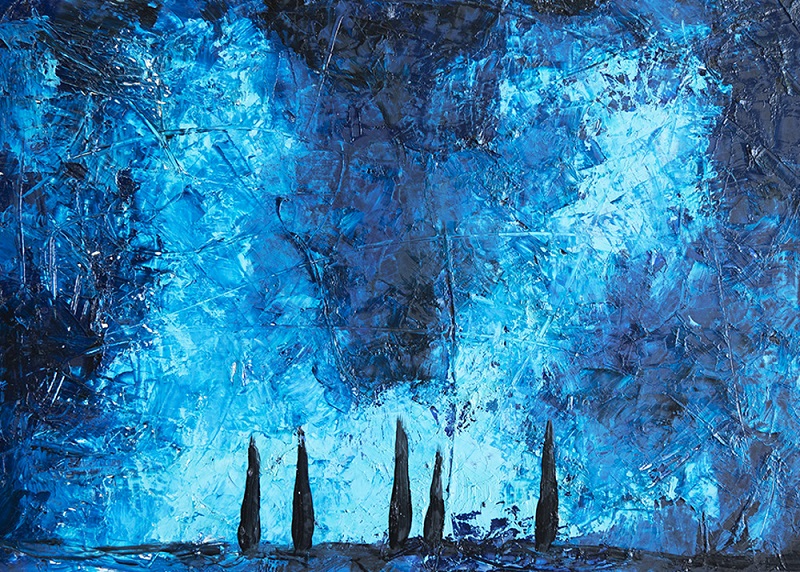
Dipinti

Matteo Ciampica - Aphonia 5197
2004 - Olio su tela - 170 X 200
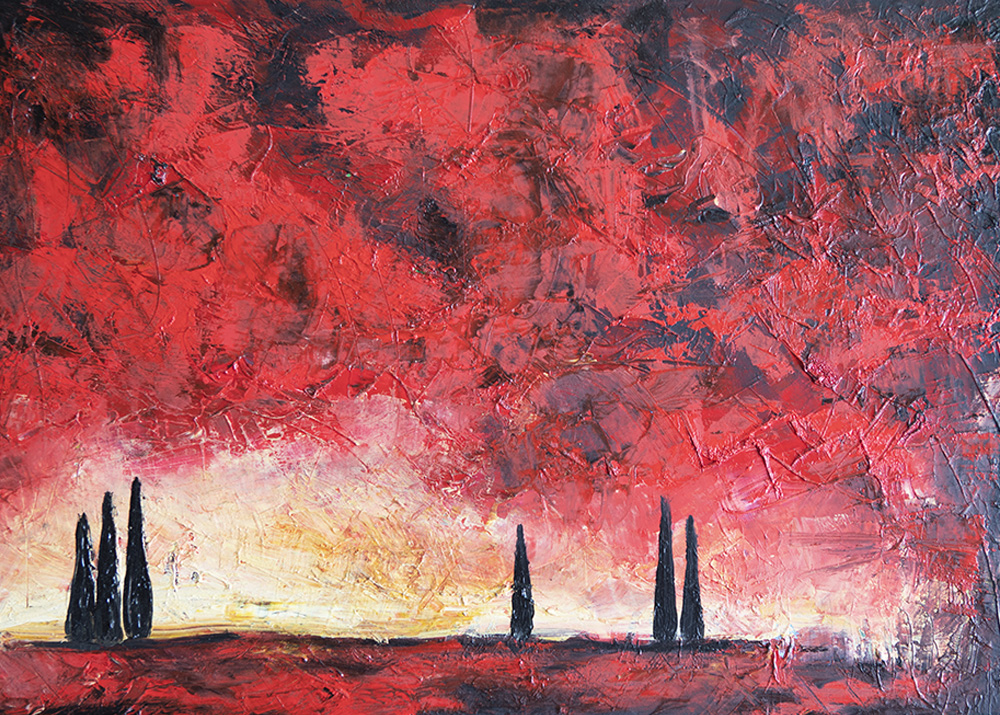


Matteo Ciampica - Aphonia 4297
2006 - Olio su tela - 170 X 200
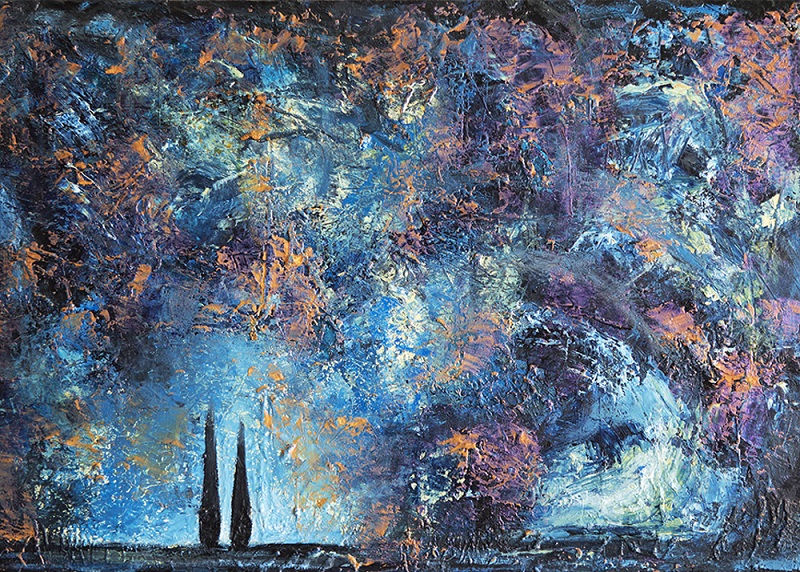


Matteo Ciampica - Aphonia 43744
2008 - Olio su tela - 170 X 200
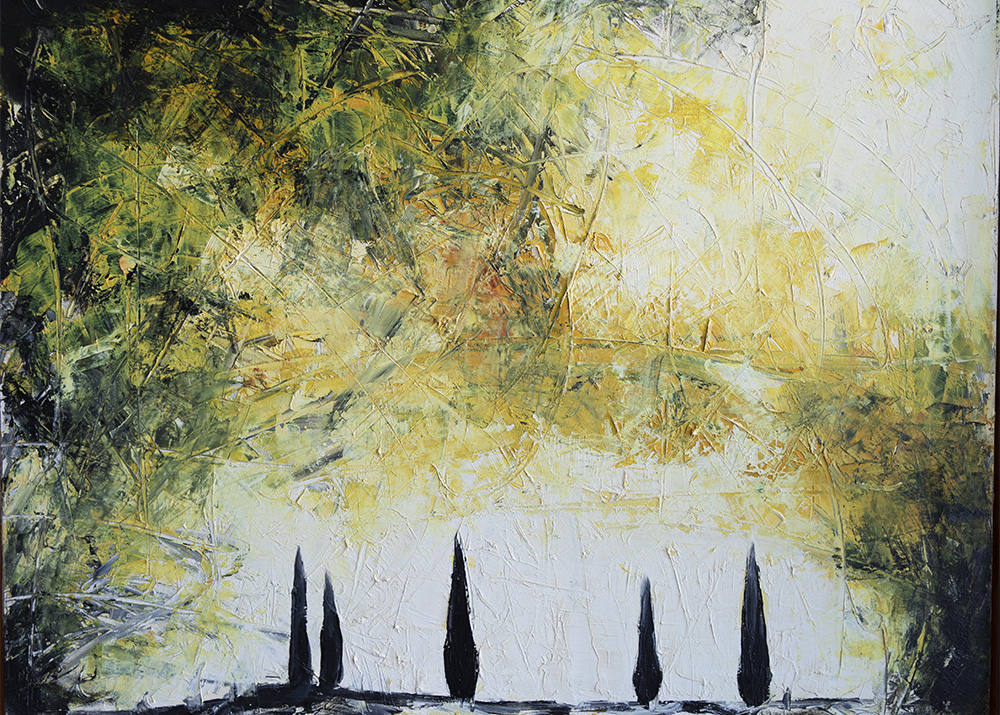

Matteo Ciampica - Aphonia 3771112
2013 - Olio su tela - 60 X 80
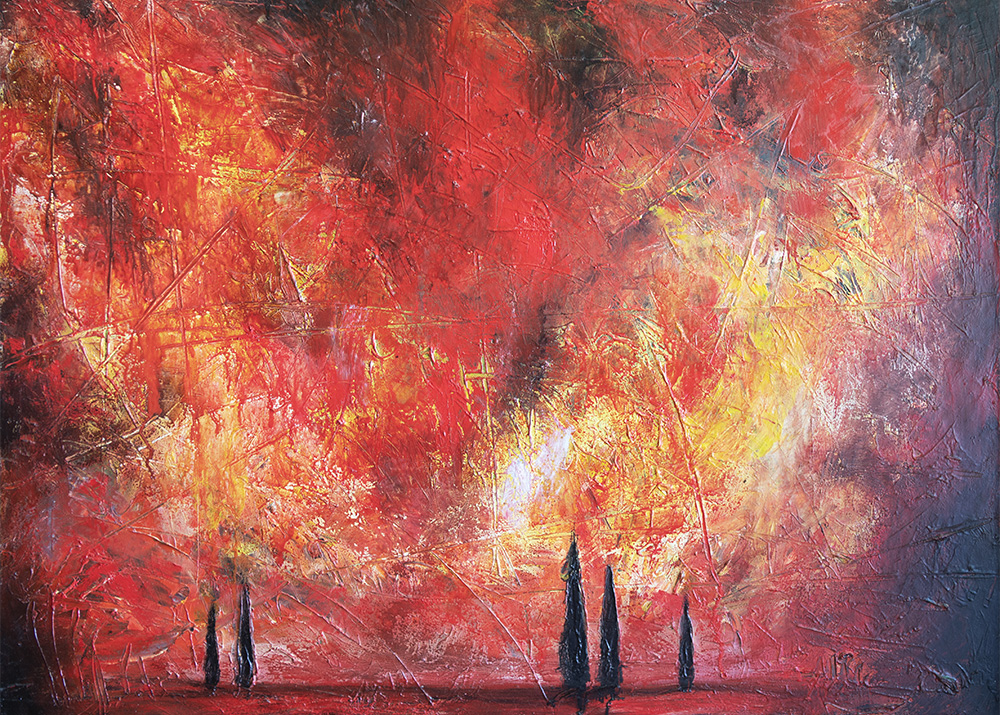

Matteo Ciampica - Aphonia 55444
2018 - Olio su tela - 60 X 80
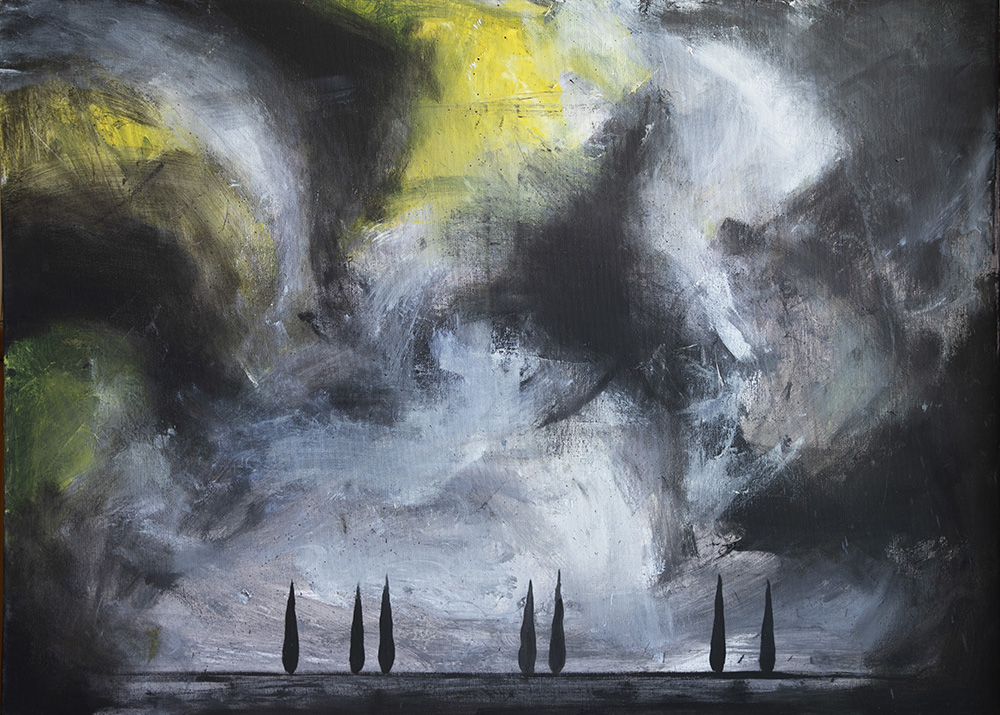

Matteo Ciampica - Aphonia 22
2023 - Olio su tela - 60 X 80


Masters   - γνῶθι σεαυτόν - Being Here - Kαιρός - Witness

Masters   - γνῶθι σεαυτόν - Being Here - Kαιρός - Witness

I am often asked which figure from the past I choose as a Master.
If by Master we mean a person who has marked my life by attributing to me the responsibility of a continuation, then I cannot indicate any univocal figure. I do not feel like someone's continuator.

If instead by Master we mean a person who has marked my life with his own artistic and philosophical research, then the list is decidedly long. I compare such Masters to lighthouses that illuminate the path along a tortuous trail. The light can be clear but, if we remain in motion, it never comes from the same source for long.

In my research it was inevitable to become a shadow in the presence of the great lighthouses of the 20th century.
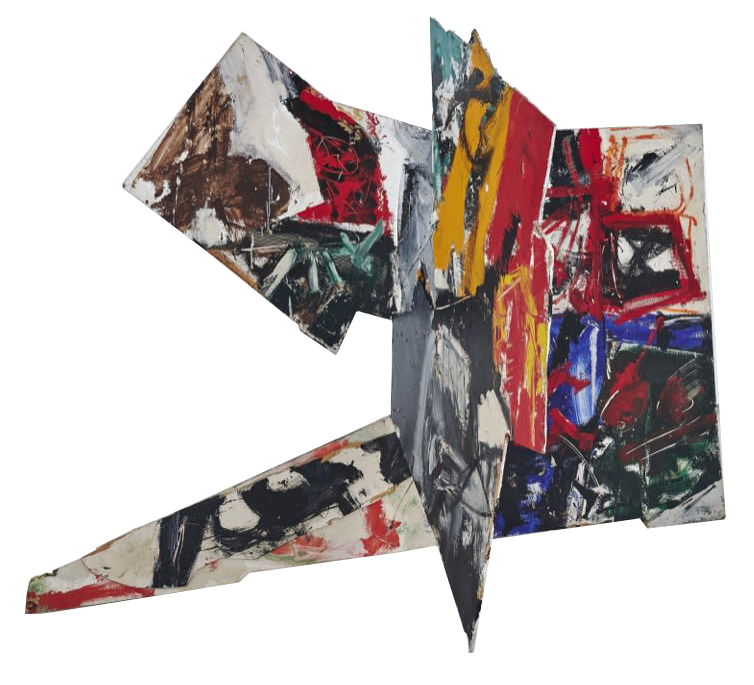
I consider Emilio Vedova (Venice, 1919 – 2006) among the most brilliant anticipators of new languages, far from figuration, promoters of matter and informal sign. Often defined as the Italian Jackson Pollock, in my opinion he surpasses its communicative dimension with the volumetric renderings of the Plurimi, which force the viewer into a new relationship, more engaging, more physical. I learned from him the desire to experiment with new Interactions with the user of my work, beyond the frontal dimension of the painting, pushing the research towards an increasingly active involvement. I am fascinated by his large brush strokes full of color, where inspirations from overseas push towards the total presence of gesture and substance.

Another master of reference is certainly Hans Hartung (Leipzig, 21 September 1904 – Antibes, 7 December 1989), dedicated to the exhausting research of the transfer of the gesture onto the pictorial support. I admire the action as a cipher of his work. I have spent hours reconstructing his gestures by following the vortices, the streaks, the scratches impressed with lightning speed. Light and darkness dance emerging from each other, I am fascinated by the colours used for the background fillings, the scratches impressed with branches and combs incorporate the beginnings of my adding something else to the brush, like the spatula, the file, the cloth. The shades open up from the intersections of the lines impressed by the gesture on the surface, sometimes expertly treated with veils of colour to cover everything, like the black of Rayonnement (1962). He captures the infinite journey of light through the depths of the Universe, and suddenly opens it up before us, merging technique with his passion for astronomy. The graphic sign directed to the explosion of energy. His works are still an object of study for me.

Emilio Vedova - Plurimo - 1962 - Mixed media on articulated wooden elements multi coloured iron hinges


Hans Hartung (Leipzig 1904 – Antibes 1989) - Rayonnement - 1962 - Olio su tela - 65 x 177
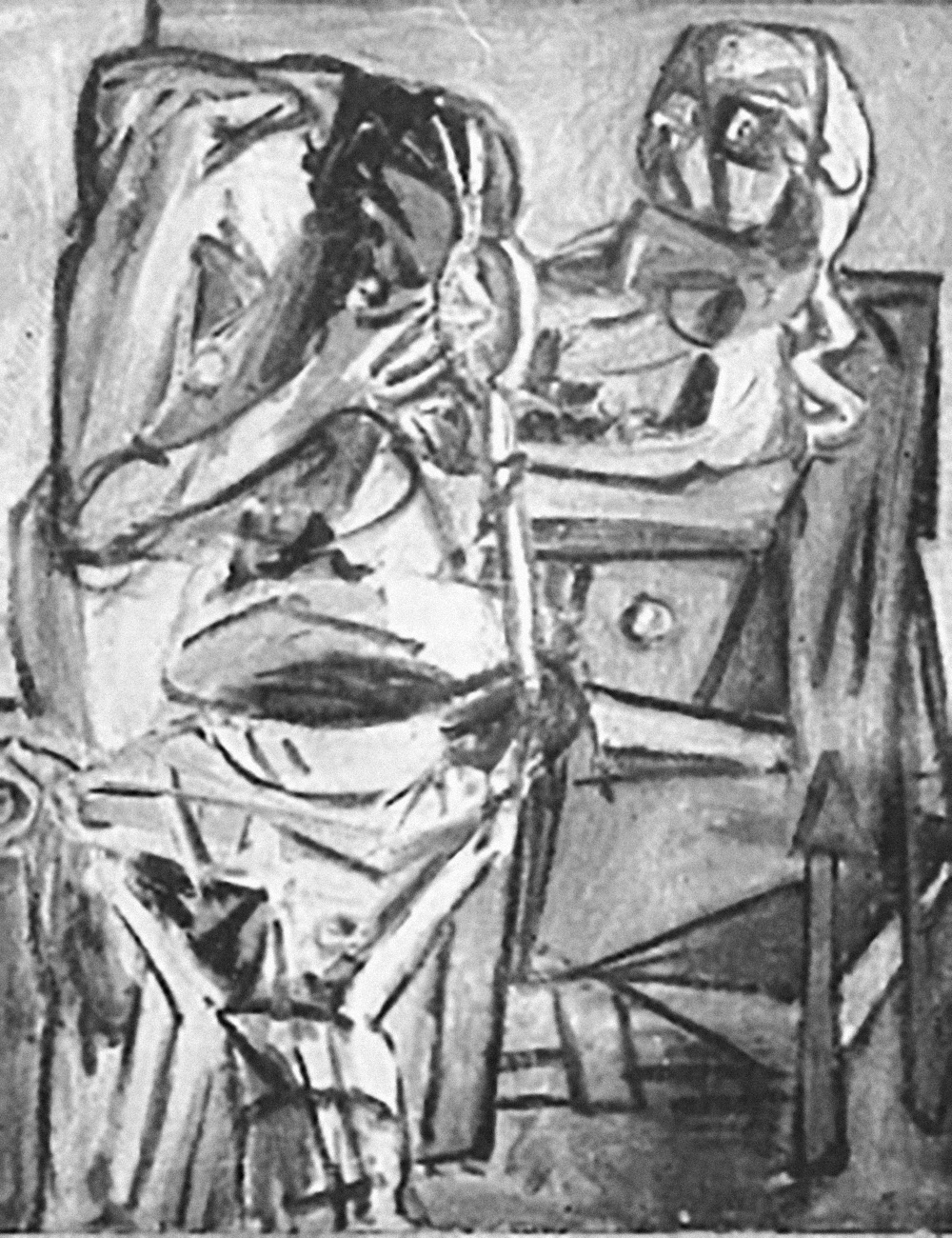

In Mario Schifano (Homs, 1934 - Rome, 1998), influenced by informal art, I find a marked materialism, with a different refusal for form, more veiled, careful, as in the Paesaggio Anemico series, in which I see the roots of my landscape deconstruction sinking. He is also dear to me for his thirst for new languages, approached with curiosity and critical investigation, remembering that he was even among the first to create works of art via computer.
I also feel close to Giorgio Moiso (Cairo Montenotte, 13 February 1942 - Savona, 23 December 2019), whose understanding of modernity was very profound, with his pictorial speed and the overabundance of color. His aesthetic reflections beyond beauty to please are interesting, the consequential renderings through forms without temporal hierarchy are admirable.
Emilio Scanavino (Genoa, 28 February 1922 – Milan, 28 November 1986) I learned the beauty of the distinctive sign, the stylised Knot that will characterise all his production is always present, always the same and always different. There is order, measure, calm, the figure of his identity is clear and recognisable. Like the Cypress for me.


I remember other great masters of lyrical and expressionist abstractionism such as Georges Mathieu (Boulogne-sur-Mer, 27 January 1921 – Boulogne-Billancourt, 10 June 2012), Giuseppe Santomaso (Venice, 26 September 1907 – Venice, 23 May 1990) and the Group of Eight (Afro, Birolli, Corpora, Moreni, Morlotti, Santomaso, Turcato, Vedova) with the multiple experiments of the relationships between form and colour. And again, Antonio Corpora (Tunis, 15 August 1909 – Rome, 6 September 2004), Afro Libio Basaldella (Udine, 4 March 1912 – Zurich, 24 July 1976), the vitality of the works of Jean- Paul Riopelle (Montréal, 1923 - Saint-Antoine-de-l'Isle-aux-Grues, 2002), the affinities I feel towards Ennio Morlotti (Lecco, 21 September 1910 – Milan, 15 December 1992) for his intense reflections on Picasso, culminating in The Woman Washing Herself, and for his material landscapes called Dossi.

Ennio Morlotti - Donna che si lava - 1945
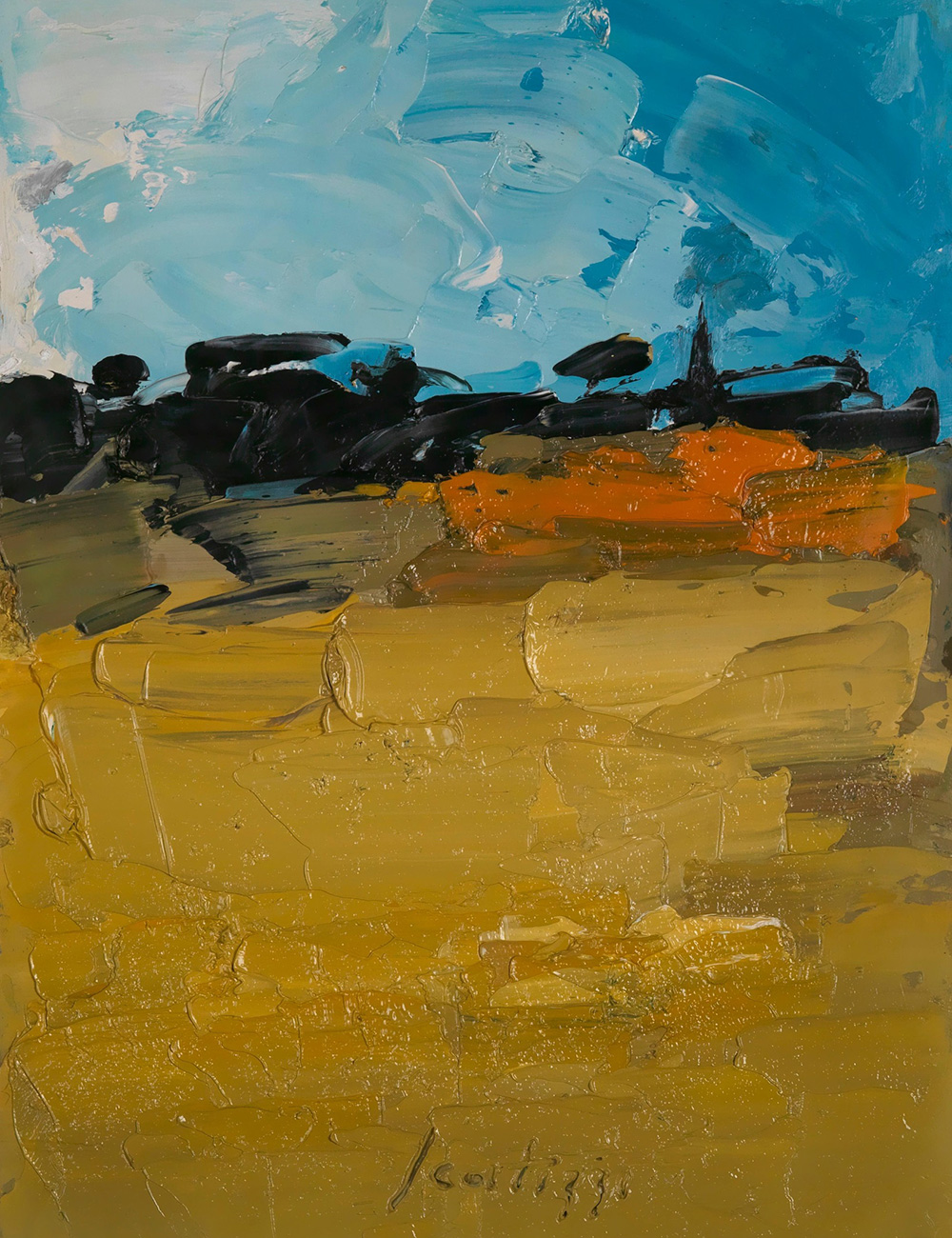

Sergio Scatizzi - Paesaggio


Sergio Scatizzi (Gragnano, 20 October 1918 – Florence, 1 December 2009) is dear to me for his research on landscape deconstruction, where I glimpsed for the first time the three symbolic lines earth-nature-sky that have shaped my research for years.

Also fundamental is the study of the Novecento movement, with Achille Funi, Anselmo Bucci, Emilio Malerba, Leonardo Dudreville, Mario Sironi, Pietro Marussig and Ubaldo Oppi, for a conscious return to form, a heartfelt recovery of the Renaissance tradition, with approximate figures, sometimes barely hinted at, up to the originality of the German neo-expressionism of Georg Baselitz (Kamenz, 23 January 1938) with his upside-down human silhouettes.

The Novecento movement is convinced that form must be simple and even if it is not real it must still be true. The form is precise and decisive, the colour is decisive.
(Margherita Sarfatti)


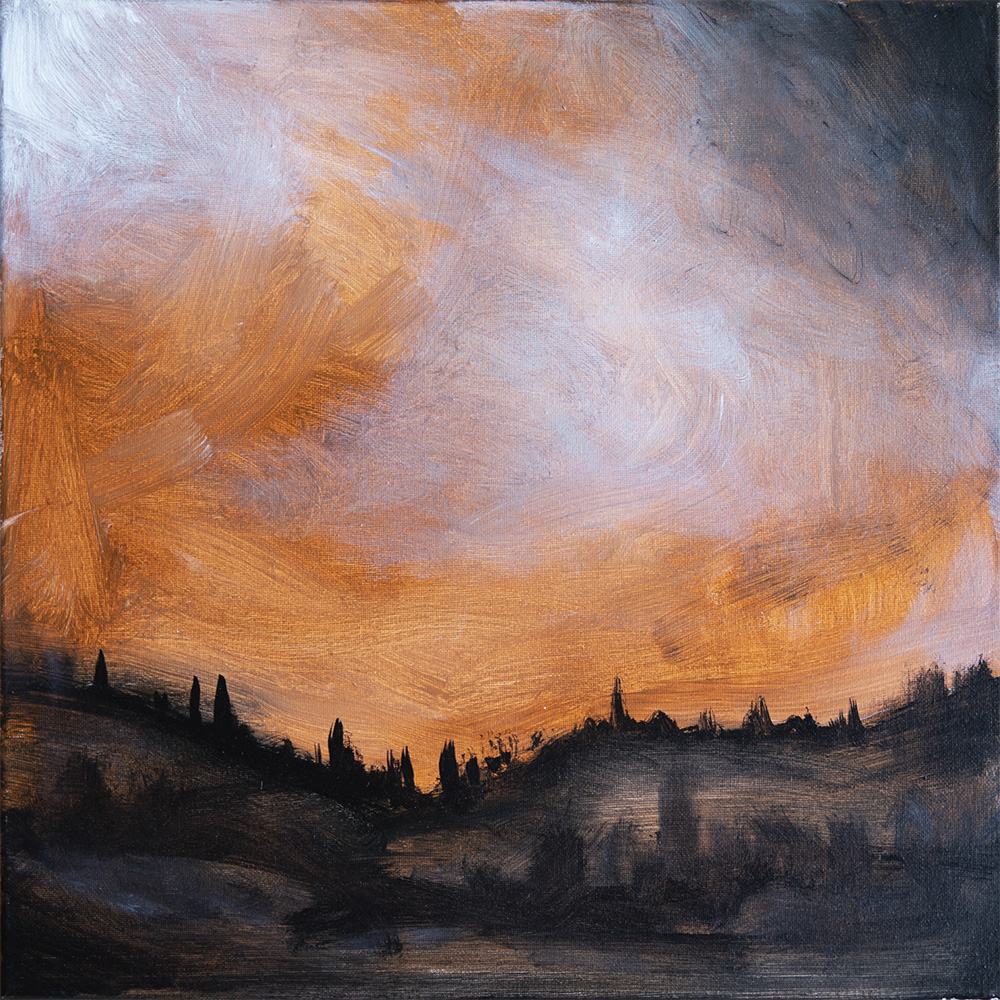
Matteo Ciampica - Senza Titolo - Seconda metà del 1980 - Olio su tela - 40 X 40 - Prime riduzioni paesaggistiche


The question remains barely touched upon, a slightly lifted veil still hides a multitude of references and considerations that go beyond the nature of this space of mine on the web. Amedeo Modigliani, Carlo Carrà, Enrico Baj, Giacomo Balla, Giorgio de Chirico, Gino Severini, Lucio Fontana, Michelangelo Pistoletto, Piero Manzoni, Renato Guttuso, Umberto Boccioni, and beyond our borders Andy Warhol, Edvard Munch, Frida Kahlo, Henri Matisse, Jackson Pollock, Mark Kostabi, Marc Chagall, Pablo Picasso, Vasilij Vasil'evič Kandinskij and many others.

I believe there is no definitive resolution.
I believe that the moment you put an end to research and comparison, you put an end to your life as an artist.
The Investigation is the only truth.


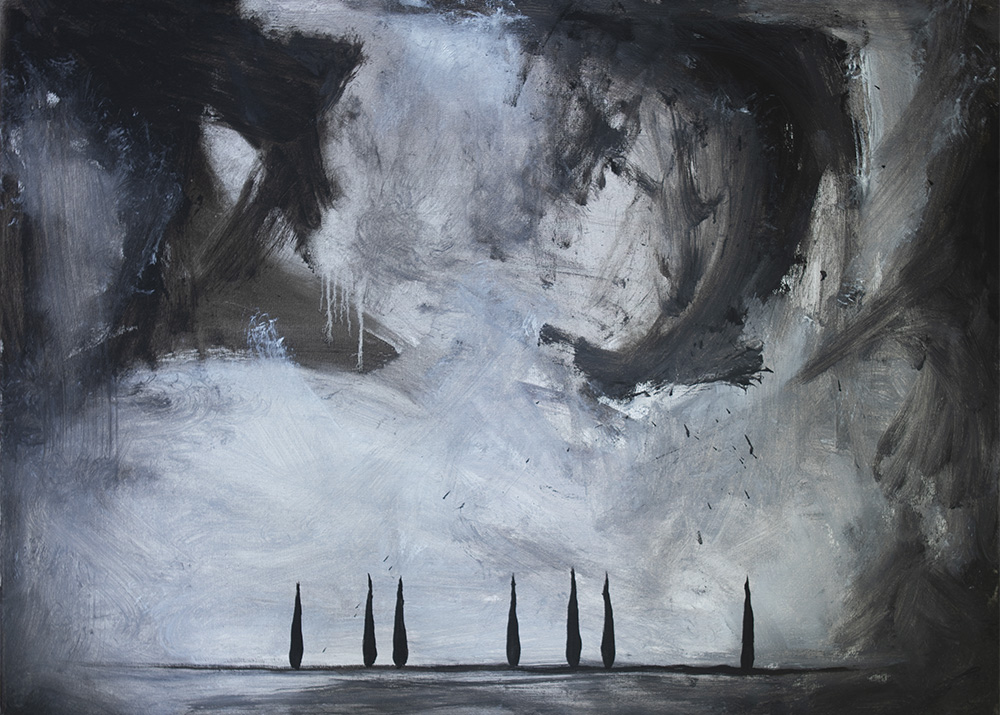
Matteo Ciampica - Aphonia 5197
2023 - Olio su tela - 140 X 180
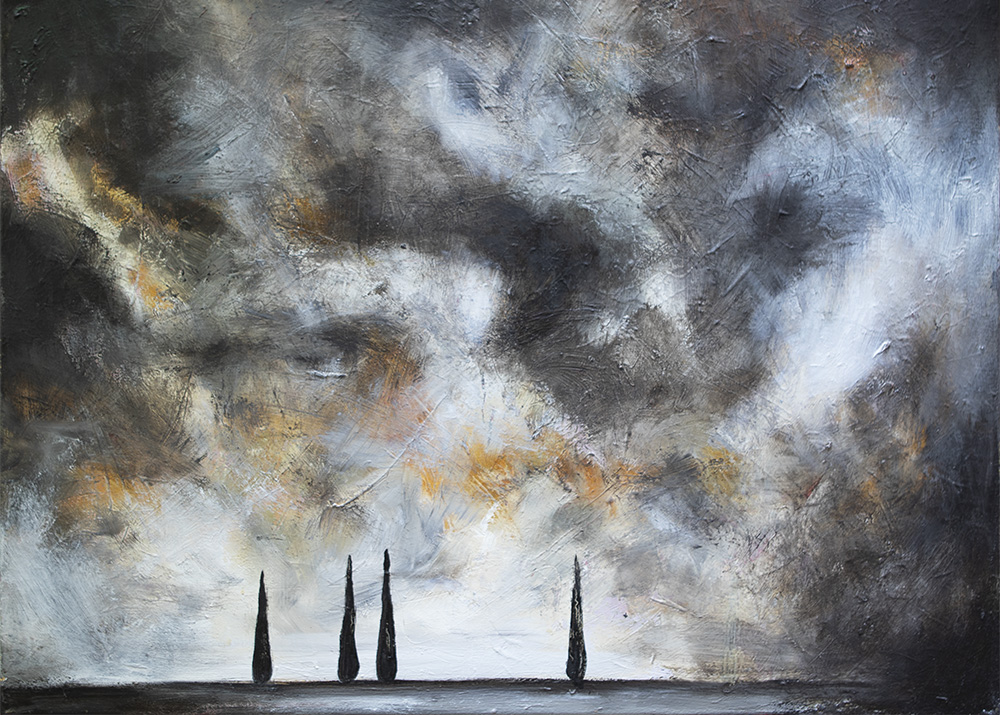


Matteo Ciampica - Aphonia 994
2022 - Olio su tela - 140 X 180
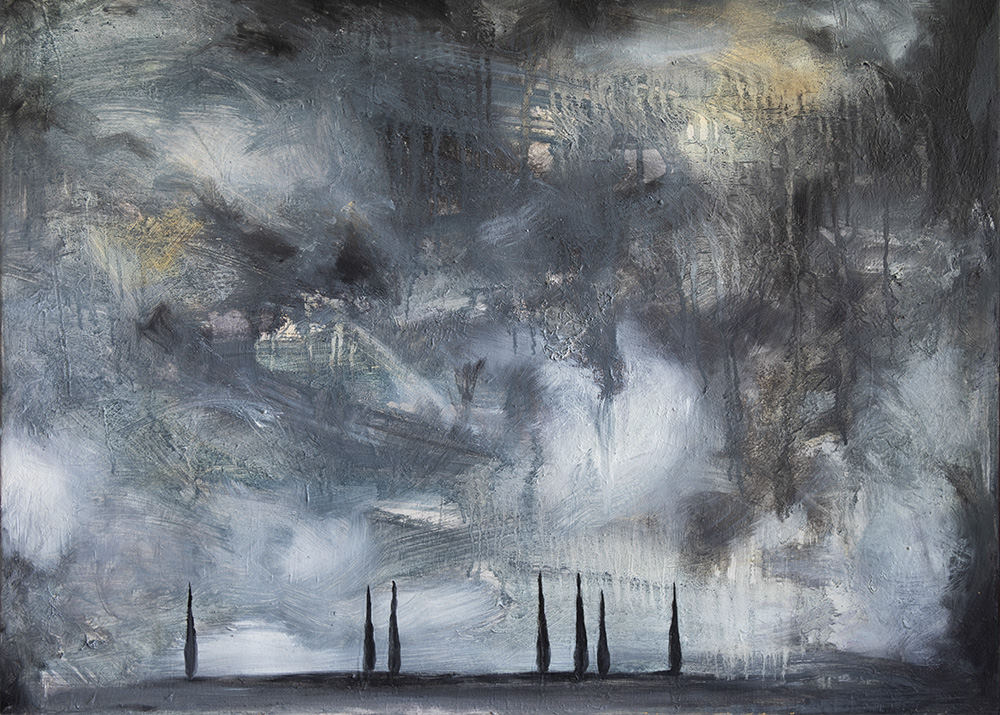


Matteo Ciampica - Aphonia 11857
2020 - Olio su tela - 140 X 180


I AM WHERE YOU ARE

I AM WHERE
YOU ARE

More and more people are transporting my artworks from one city to another, traveling together all over the world. More and more people are writing to tell me about their emotions. In doing so, they become witnesses of a rediscovered time, an opportune time that generates solidarity and dialogue between human beings. Your testimony tells of an art rooted in existence, which permeates everyday life. Your participation expresses the need to find oneself in small gestures, in a brief understanding between strangers, in a simple painting to share. Your actions transform my art into an affirmation of life, into a critical presence in the world. Overcoming is built in interaction. Thank you for participating in my initiatives, your testimonies are the greatest reward for me. Thus, even my time in this world acquires a small meaning. Thank you again.

I AM WHEN YOU ARE

I AM WHEN
YOU ARE
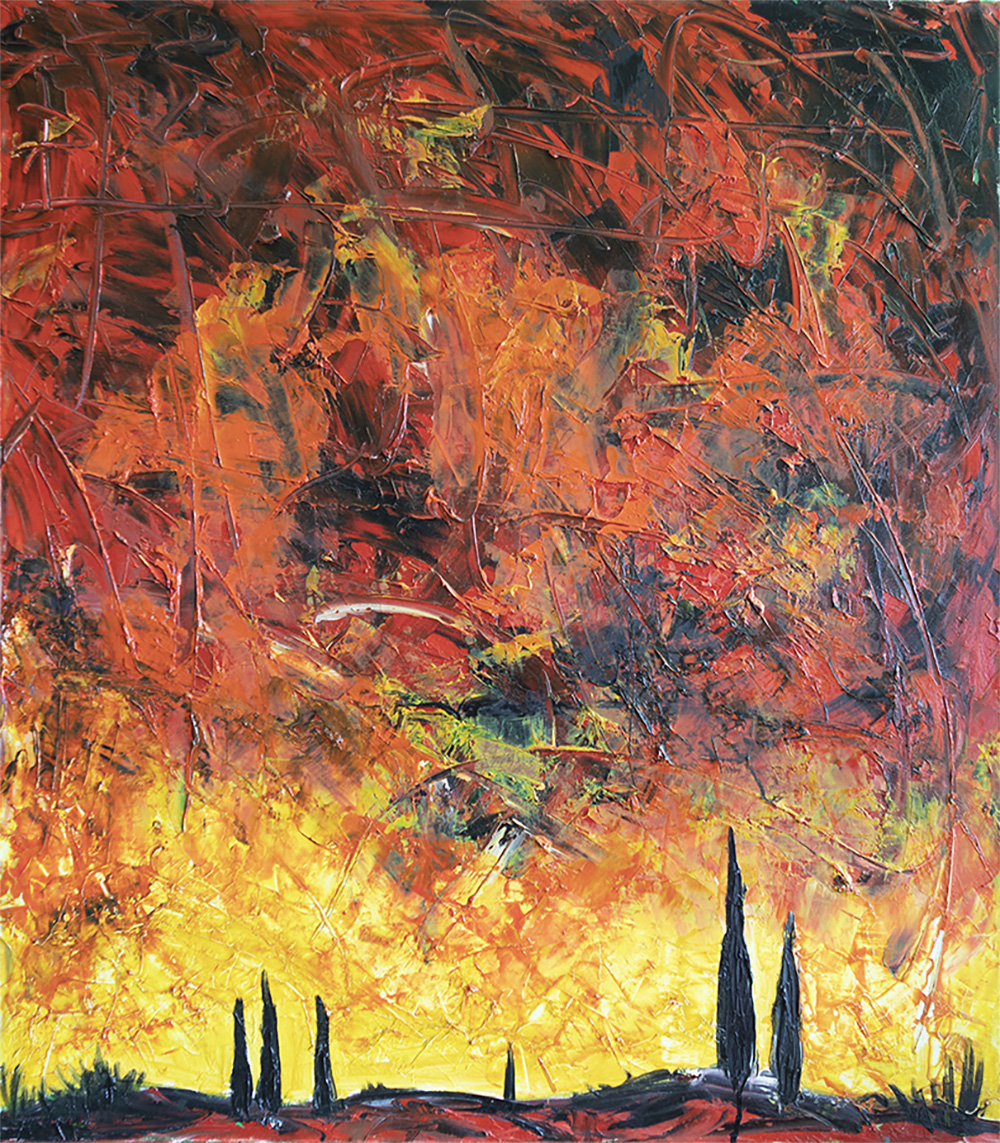

Matteo Ciampica - Aphonia 8815
2009 - Olio su tela - 80 X 70
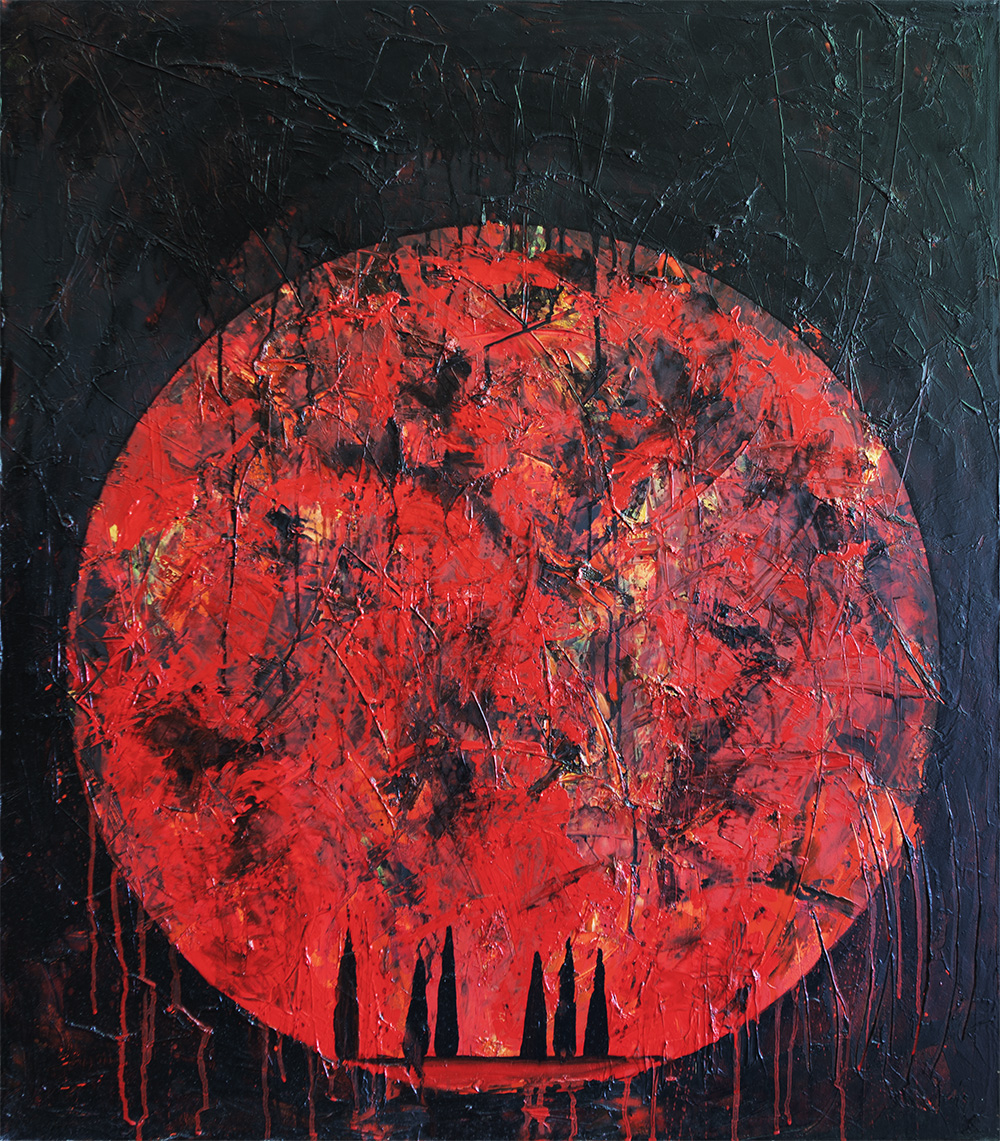

Matteo Ciampica - Aphonia 4576
2016 - Olio su tela - 80 X 70


Masters -   The Cypress - γνῶθι σεαυτόν   - Being Here - Kαιρός - Witness

Masters -   The Cypress - γνῶθι σεαυτόν   - Being Here - Kαιρός - Witness

The cypress, the measure of my persistence.


Non sum de fragili dolatus ulmo,
nec quae stat rigida supina vena,
de ligno mihi quolibet columna est,
sed viva generata de cupressu:
quae nec saecula centiens peracta
nec longae cariem timet senectae.

Non sono stato tagliato con l’accetta da un fragile olmo; questa verga che si drizza con le sue forti vene non proviene da un legno qualsiasi, ma da un vivo cipresso, che non teme né il volgere di cento generazioni, né la corrosione della lunga vecchiaia.

Marco Valerio Marziale (Augusta Bilbilis, 40 - 104) - Epigrammi, Libro VI° - Traduzione di Giuseppe Norcio
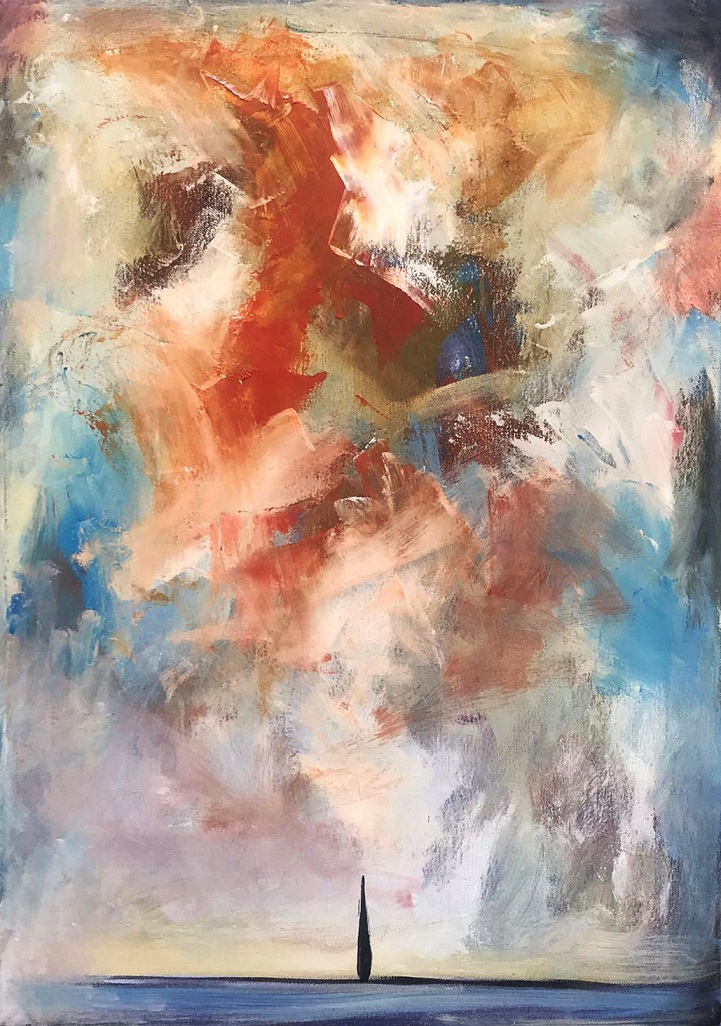

I am that Cypress, persistent in the investigation, alert and attentive, I scrutinize every gaze to broaden my own. I humbly walk the infinite path of comparison.

τὸ γνῶναι ἑαυτὸν οὐδὲν ἄλλο ἐστὶν ἢ τοῦ σύμπαντος κόσμου φύσιν γνῶναι
Conoscere se stesso non è altro che conoscere la natura dell’universo
(I 7 Sapienti - inciso sul frontone del tempio di Apollo in Delfi)

ἄνθρωπε, μὴ μέγα φρόνει, γνῶθι σαυτόν, ἰδὲ τὴν τύχην ἁπάντων οὖσαν κυρίαν
Uomo, non essere superbo, conosci te stesso, vedi che la sorte è signora di tutti
(Diodoro Siculo)


Matteo Ciampica - Aphonia 001 - 2000 - Olio su tela - 60 X 40


Masters - γνῶθι σεαυτόν -   The Cypress - the Man, the Being   - Kαιρός - Witness

Masters - γνῶθι σεαυτόν -   The Cypress - the Man, the Being   - Kαιρός - Witness

The Cypress, the measure of my being present in the world.
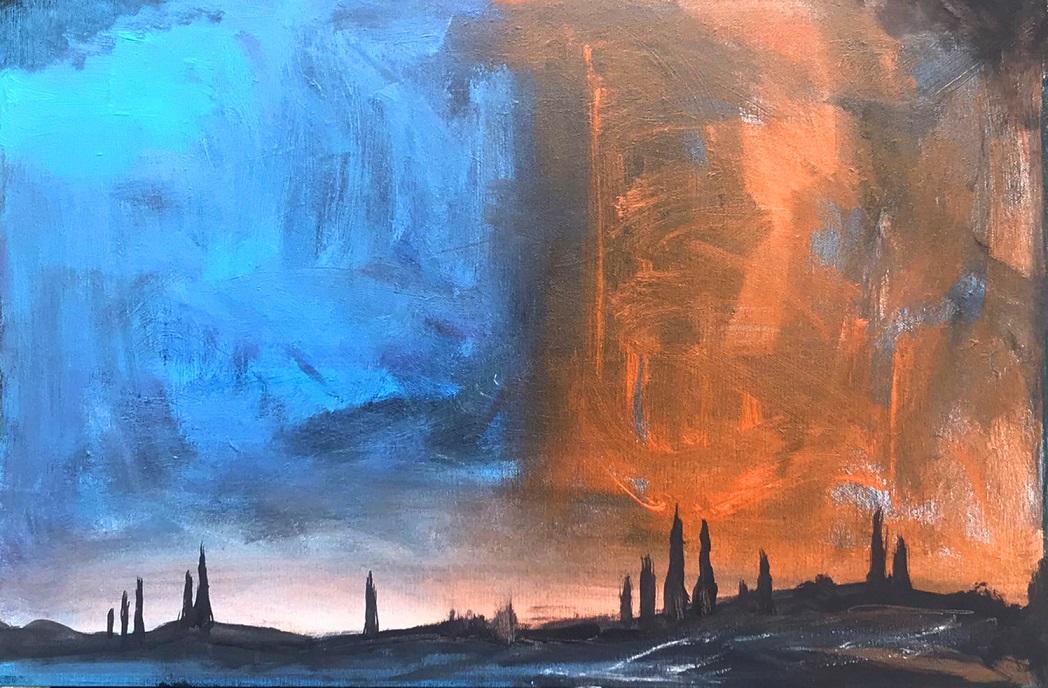
Matteo Ciampica - Senza Titolo - Seconda metà del 1980 - Olio su tela - 40 X 60 - Prime riduzioni paesaggistiche

Of this type of paintings, dating back to the dawn of my activity, almost nothing remains today. They clearly describe a moment in which my investigation found its first concretizations on canvas, a very intense period, full of doubts, controversial intuitions, in the exhausting search for an improvement and a comparison difficult to find. A wonderful age of which I do not deny anything, where it is easy to notice the primordial attachment to the figurative rendering of the visible, through the gaze on reality, in a clear distinction between earth-nature-sky, far from the landscape reduction that would have engaged me in the future.

The absent par excellence is the symbol of critical presence, of testimony, of the watchful and interpretive gaze. The man is missing, the cypress is missing, the dimension of existence and participation is missing. Being there is missing.

Many years later, I literally burned all the works of this type, not so much to deny the immaturity of my youthful reasoning, but to definitively eliminate an irritating presence, a source of distraction, whose gaze diverted the mind towards the past in a whirlwind of very long reflections always identical, repeated thousands of times in the inability to detach. Looking at them, I was as if forced to retrace every stage of my being, I remained still for hours, only to realize that the day was over and I had added nothing new on the last canvas. It did not even help to lock them in another room, their existence was enough to torment me. Some of these works escaped the massacre because they were in the homes of friends and relatives, others returned to me over time, cleaning out the attic and cellar, preparing the move, changing the premises of the studio. I know the location of others, sometimes I see them again, after many years their sight no longer bothers me. Others have disappeared into thin air, passing from hand to hand.

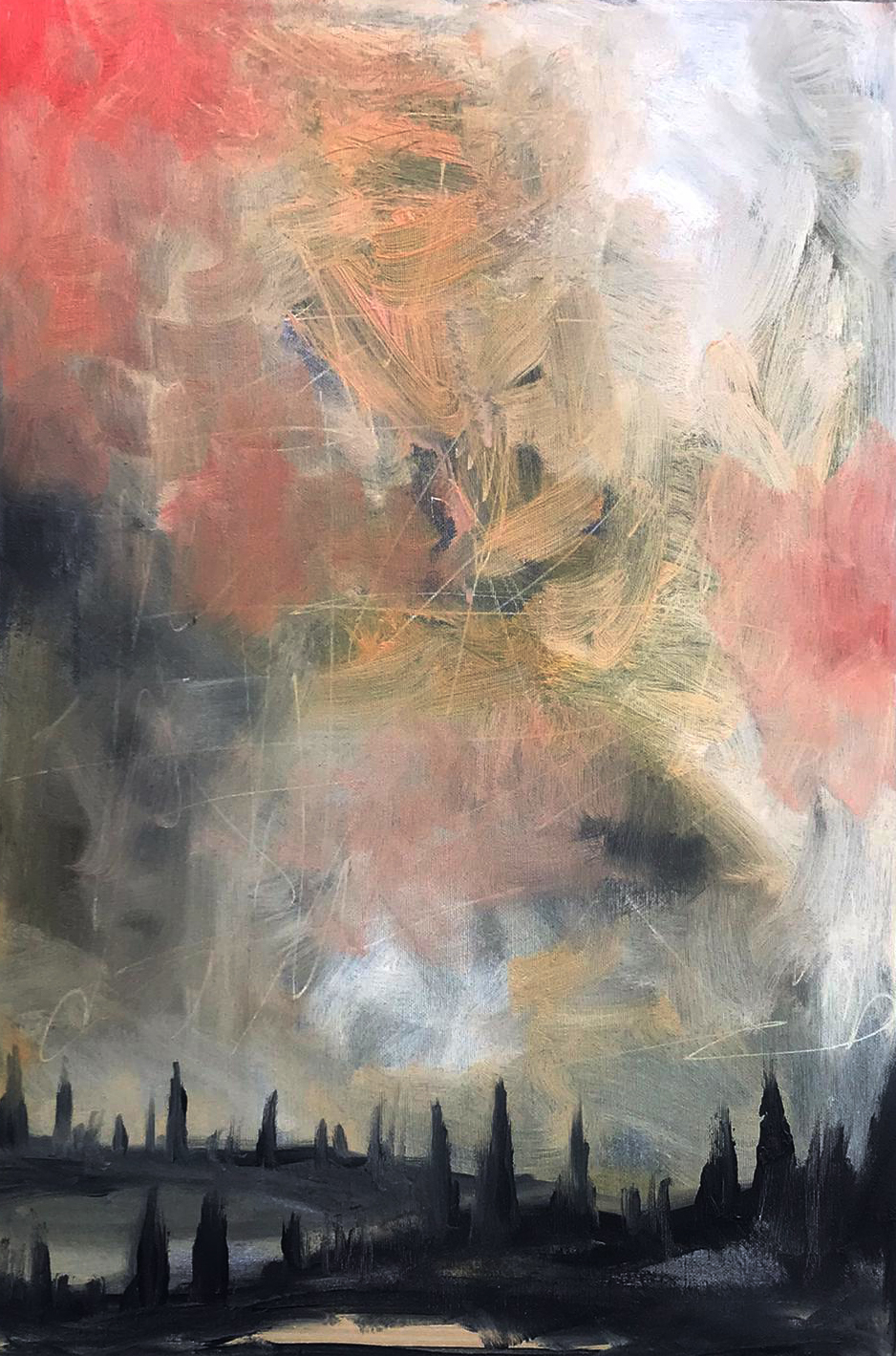
Matteo Ciampica - Senza Titolo - Seconda metà del 1980 - Olio su tela - 60 X 40 - Prime riduzioni paesaggistiche
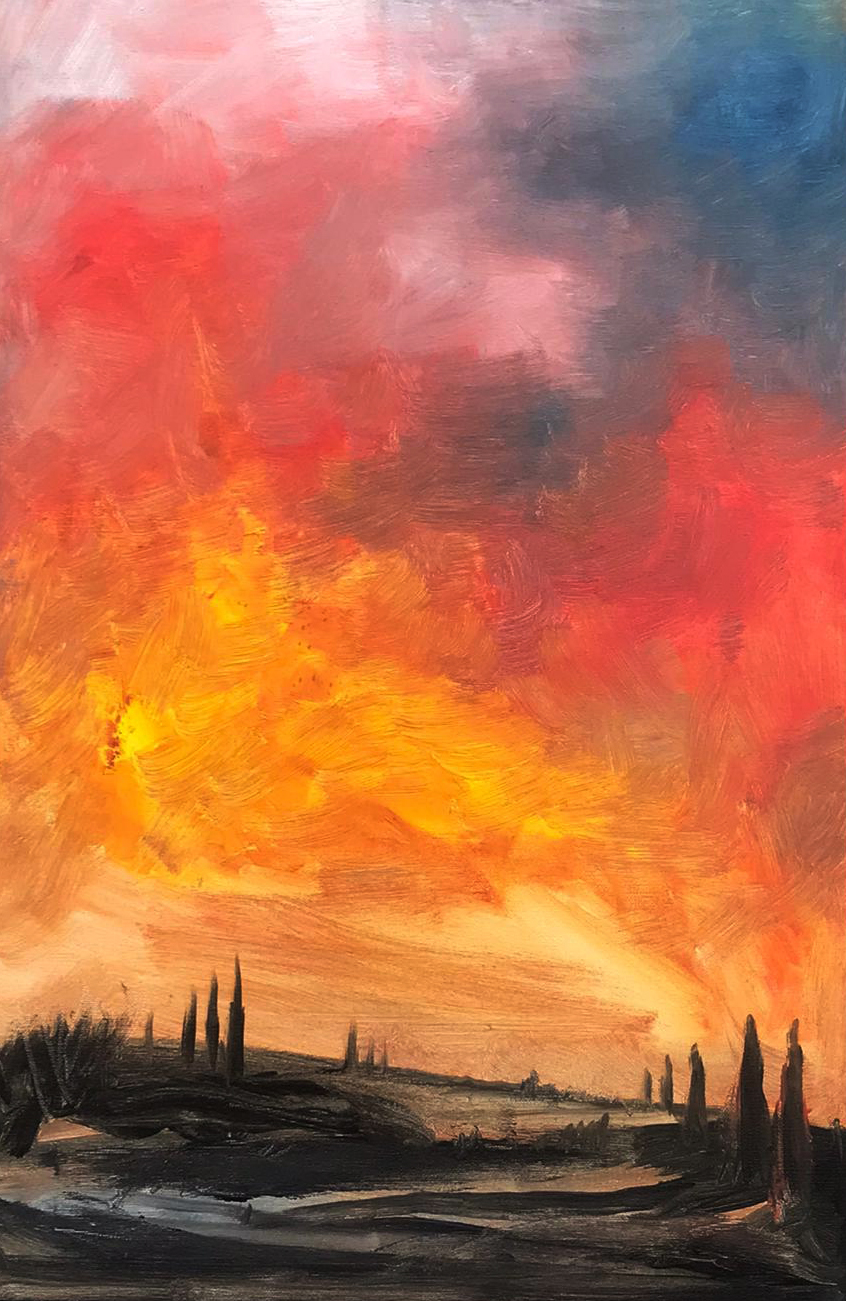

Matteo Ciampica - Senza Titolo - Seconda metà del 1980 - Olio su tela - 60 X 40 - Prime riduzioni paesaggistiche


The inexorable mechanism of time burst forth ever more forcefully in the years that followed, defining the theme of the instant and of extraction, of the configuration and duration. The search for the value of an instant, of its meaning, of its extraction, of all the senses one can attribute to it by questioning the world. The value of my time, of man's time.

I am that missing Cypress, rediscovered in the critical scrutiny of any conferral of meaning by others.


Giosue Carducci
Davanti a San Guido


I cipressi che a Bólgheri alti e schietti
Van da San Guido in duplice filar,
Quasi in corsa giganti giovinetti
Mi balzarono incontro e mi guardâr.

Mi riconobbero, e – Ben torni omai –
Bisbigliaron vèr’ me co ’l capo chino –
Perché non scendi? Perché non ristai?
Fresca è la sera e a te noto il cammino.

Oh sièditi a le nostre ombre odorate
Ove soffia dal mare il maestrale:
Ira non ti serbiam de le sassate
Tue d’una volta: oh, non facean già male!

Nidi portiamo ancor di rusignoli:
Deh perché fuggi rapido cosí?
Le passere la sera intreccian voli
A noi d’intorno ancora. Oh resta qui! –

– Bei cipressetti, cipressetti miei,
Fedeli amici d’un tempo migliore,
Oh di che cuor con voi mi resterei –
Guardando io rispondeva – oh di che cuore!

Ma, cipressetti miei, lasciatem’ ire:
Or non è piú quel tempo e quell’età.
Se voi sapeste!… via, non fo per dire,
Ma oggi sono una celebrità.

E so legger di greco e di latino,
E scrivo e scrivo, e ho molte altre virtú:
Non son piú, cipressetti, un birichino,
E sassi in specie non ne tiro più.

E massime a le piante. – Un mormorio
Pe’ dubitanti vertici ondeggiò,
E il dí cadente con un ghigno pio
Tra i verdi cupi roseo brillò.

Intesi allora che i cipressi e il sole
Una gentil pietade avean di me,
E presto il mormorio si fe’ parole:
– Ben lo sappiamo: un pover uom tu se’.

Ben lo sappiamo, e il vento ce lo disse
Che rapisce de gli uomini i sospir,
Come dentro al tuo petto eterne risse
Ardon che tu né sai né puoi lenir.

A le querce ed a noi qui puoi contare
L’umana tua tristezza e il vostro duol.
Vedi come pacato e azzurro è il mare,
Come ridente a lui discende il sol!

E come questo occaso è pien di voli,
Com’è allegro de’ passeri il garrire!
A notte canteranno i rusignoli:
Rimanti, e i rei fantasmi oh non seguire;

I rei fantasmi che da’ fondi neri
De i cuor vostri battuti dal pensier
Guizzan come da i vostri cimiteri
Putride fiamme innanzi al passegger.

Rimanti; e noi, dimani, a mezzo il giorno,
Che de le grandi querce a l’ombra stan
Ammusando i cavalli e intorno intorno
Tutto è silenzio ne l’ardente pian,

Ti canteremo noi cipressi i cori
Che vanno eterni fra la terra e il cielo:
Da quegli olmi le ninfe usciran fuori
Te ventilando co ’l lor bianco velo;

E Pan l’eterno che su l’erme alture
A quell’ora e ne i pian solingo va
Il dissidio, o mortal, de le tue cure
Ne la diva armonia sommergerà. –

Ed io – Lontano, oltre Apennin, m’aspetta
La Titti – rispondea – ; lasciatem’ ire.
È la Titti come una passeretta,
Ma non ha penne per il suo vestire.

E mangia altro che bacche di cipresso;
Né io sono per anche un manzoniano
Che tiri quattro paghe per il lesso.
Addio cipressi! addio, dolce mio piano! –

– Che vuoi che diciam dunque al cimitero
Dove la nonna tua sepolta sta? –
E fuggíano, e pareano un corteo nero
Che brontolando in fretta in fretta va.

Di cima al poggio allor, dal cimitero,
Giú de’ cipressi per la verde via,
Alta, solenne, vestita di nero
Parvemi riveder nonna Lucia;

La signora Lucia, da la cui bocca,
Tra l’ondeggiar de i candidi capelli,
La favella toscana, ch’è sí sciocca
Nel manzonismo de gli stenterelli,

Canora discendea, co ’l mesto accento
De la Versilia che nel cuor mi sta,
Come da un sirventese del trecento,
Pieno di forza e di soavità.

O nonna, o nonna! deh com’era bella
Quand’ero bimbo! ditemela ancor,
Ditela a quest’uom savio la novella
Di lei che cerca il suo perduto amor!

– Sette paia di scarpe ho consumate
Di tutto ferro per te ritrovare:
Sette verghe di ferro ho logorate
Per appoggiarmi nel fatale andare:

Sette fiasche di lacrime ho colmate,
Sette lunghi anni, di lacrime amare:
Tu dormi a le mie grida disperate,
E il gallo canta, e non ti vuoi svegliare. –

Deh come bella, o nonna, e come vera
È la novella ancor! Proprio cosí.
E quello che cercai mattina e sera
Tanti e tanti anni in vano, è forse qui,

Sotto questi cipressi, ove non spero
Ove non penso di posarmi piú:
Forse, nonna, è nel vostro cimitero
Tra quegli altri cipressi ermo là su.

Ansimando fuggía la vaporiera
Mentr’io cosí piangeva entro il mio cuore;
E di polledri una leggiadra schiera
Annitrendo correa lieta al rumore.

Ma un asin bigio, rosicchiando un cardo
Rosso e turchino, non si scomodò:
Tutto quel chiasso ei non degnò d’un guardo
E a brucar serio e lento seguitò.


Masters - γνῶθι σεαυτόν - Being Here -   The Cypress - Kαιρός   - Witness

Masters - γνῶθι σεαυτόν - Being Here -   The Cypress - Kαιρός   - Witness

The Cypress, the measure of our Opportunity.
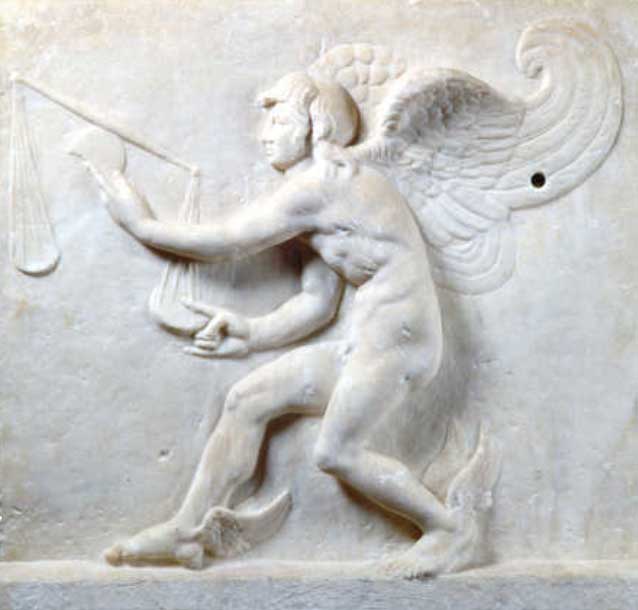
Lisippo - Scultura di Kairòs - 350 a.C. circa - Museo di Antichità di Torino
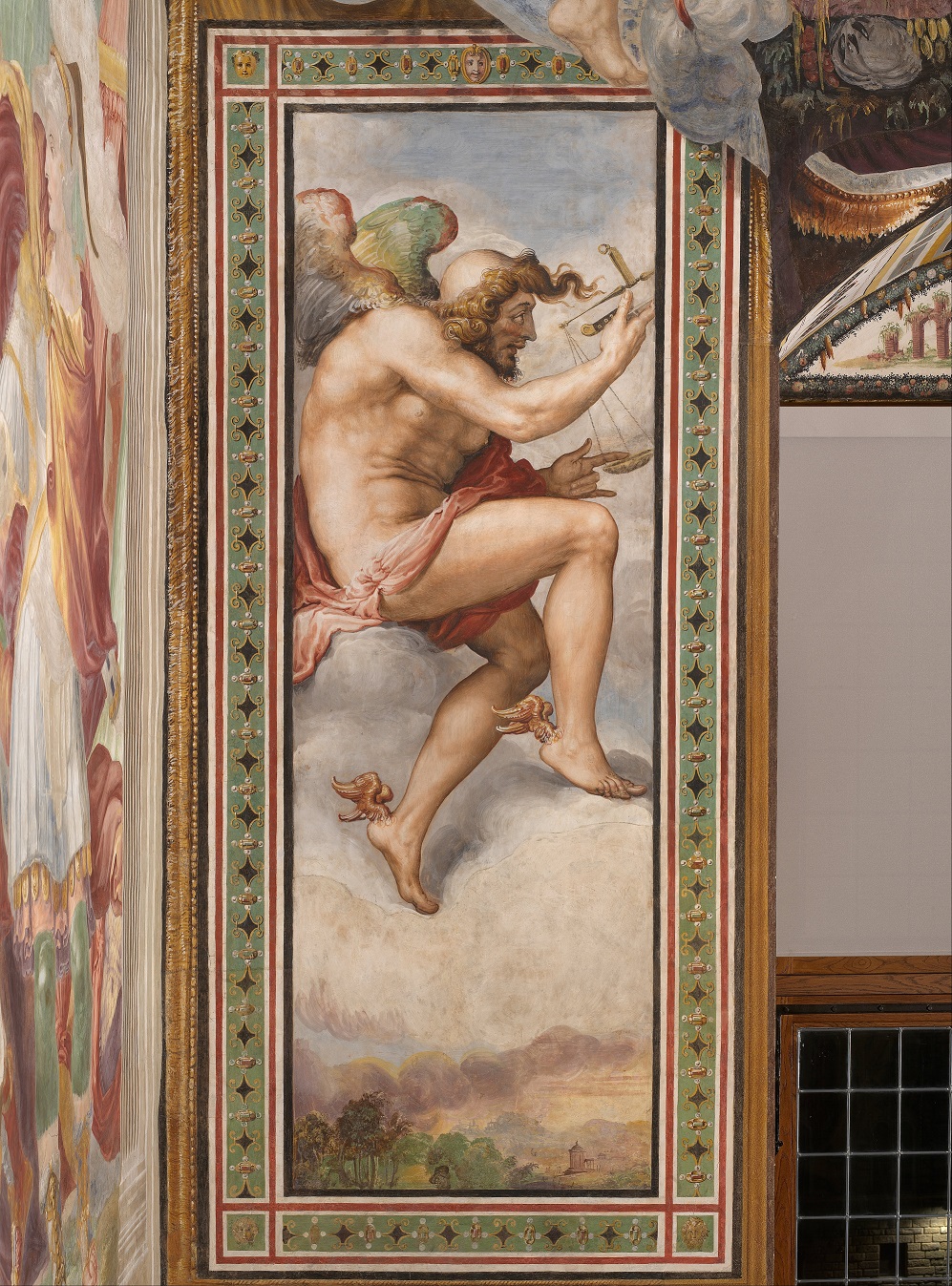

The people who generated all knowledge in the West, the Greek people, had a vocabulary of over 85,000 words, and many writers used to create new terms to enrich their content. In Aeschylus' Oresteia alone, there are over a thousand neologisms - ἅπαξ λεγόμενον (said only once - words that, as far as we know from ancient texts, can be traced in a unique way, never repeated elsewhere). It is not surprising then that the Greeks could name, and contextualize, Time with four different meanings.

Eνιαυτός (Eniautos) was the term used to indicate a fixed and defined period such as a year, a cycle, a season. Aἰών (aion) expressed the concept of absolute and immutable Time, eternity. Χρόνος (Kronos) was the Time of the clock, measurable, sequential, the infinite succession of instants, the chronological order of events, its intrinsic connotation was ‘Quantitative’. Finally, the word Kαιρός (kairos) indicated an imprecise but limited Time, of particular relevance, a moment different from all the others because it was the bearer of meaning, worthy of memory; its dimension is ‘Qualitative’. The same concept, four words, four meanings. And since, as Heidegger teaches us, no man can think beyond the words he possesses, here is demonstrated once again the power of the logos, the measure of human intelligence.

Francesco Salviati - Kairos, Il Tempo Opportuno - 1543 - Firenze, Palazzo Vecchio

La raffigurazione gia' definita nella "Vita" del Salviati dal Vasari come un'allegorie del tempo, e' stato identificata (Cheney) con il dio greco' kairos' ovvero la personificazione del tempo quale breve momento che segna una svolta nella vita, dell'Occasione che non bisogna far fuggire. (La figura dell'Occasione ha infatti un lungo ciuffo per afferrarla sulla fronte, mentre il retro della testa e' calvo. ) L'immagine realizzata dal Salviati e' da mettere in relazione con una scolpita in una lastra antica conservata nel museo di Torino. - - > Vedi la scheda al Catalogo dei Beni Culturali


Kαιρός is therefore nestled in Χρόνος, the infinite instants are not all the same, there are some more significant, made preferred by the conferral of a value, by the gesture that captures them, by the story in which they are inscribed, by the mind that grasps them, that recognizes them as part of one's own feeling. It is the Time of Opportunity, it is the Opportunity to rediscover one's own time in the modern defragmentation that cancels everything. With my artworks I extract these configurations of time and alter their duration, I insert them into a narration, I give them a meaning that dilates their persistence and opens windows of critical observation and reflective quiet, on the eternity of the captured instant, on the frenetic whirlwind from which it derives, on the reconnection of these instants for a new daily experience of change.

Pause, observe calmly, and you will see what the culture of immediacy has taken away from you.

We are that Cypress, which returns to the world of experience those privileged moments that speed has suppressed, making them available for new constructions of meaning. He is there, still, observing, extracting, interpreting, delivering. Be Witnesses of this rediscovered Time.


Masters - γνῶθι σεαυτόν - Being Here - Kαιρός -   The Cypress - The Witness

Masters - γνῶθι σεαυτόν - Being Here - Kαιρός -   The Cypress - The Witness

The Cypress, measure of the referral beyond the visible and of all meanings.
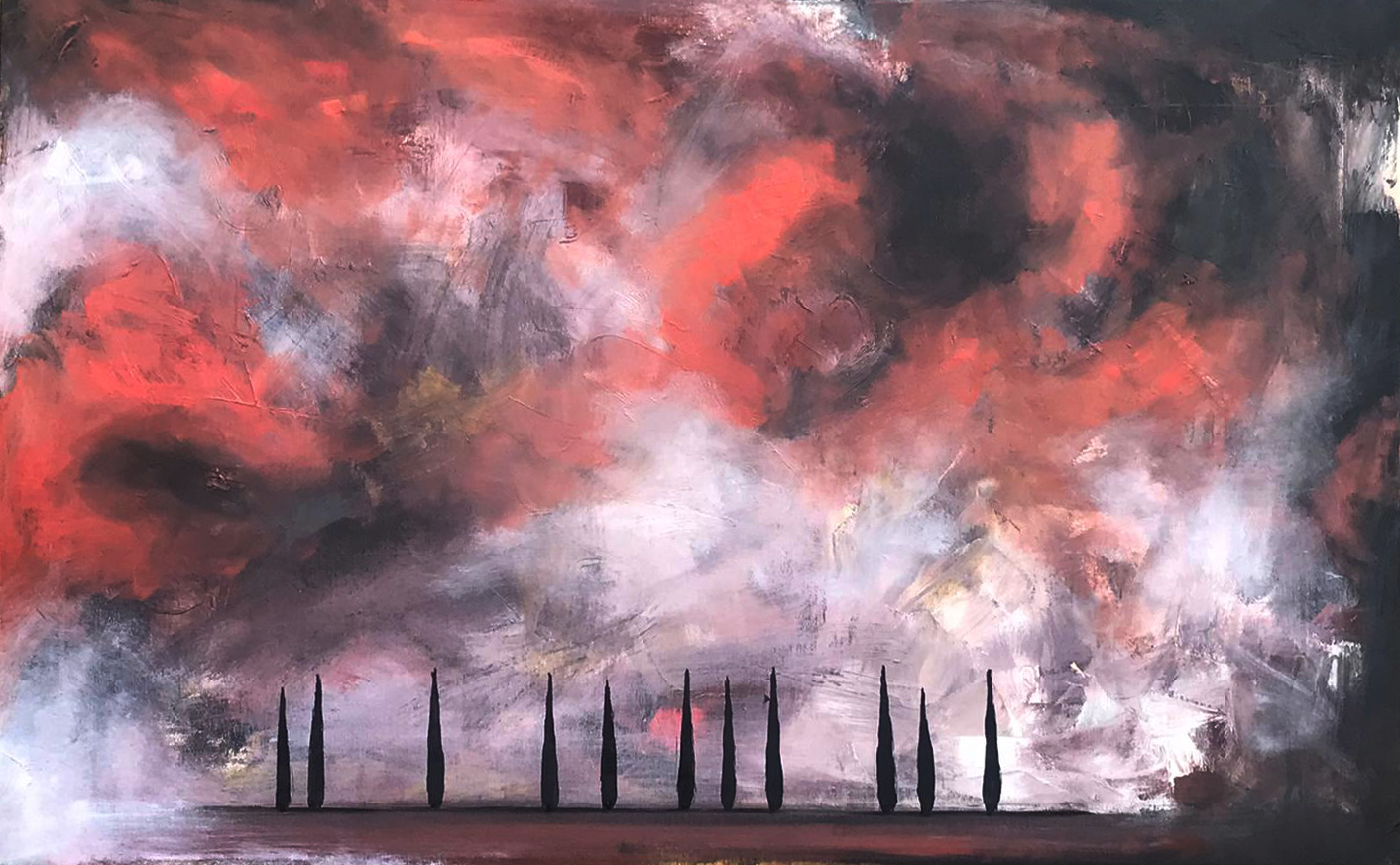
Matteo Ciampica - Aphonia 119911 - 2010 - Olio su tela - 60 X 40

There is no Art without reference to the furtherness of meaning, and this construction of meaning is never univocal, nor unidirectional. In the work there are other contents, not visible to the eye, but perceptible by the unconscious. To grasp one's own meaning, the viewer must immerse himself in the irrational and navigate without references, to establish a dialogue with the artist's madness, where nothing is conceived according to the rules of reason. The difference between any object and a work of art is all here, in the ability to refer to contents beyond the gaze, in disclosing the underlying multiplicity.

It is here that the viewer comes into contact with the invisible that I have spread on the canvas, beyond the senses, beyond beauty, beyond the eye, beyond every choice I have impressed or narrated here. The work of art triggers the continuous reference to the ineffable, forcing anyone to scrutinize their soul, to descend naked into the abyss as the only dimension to travel through every meaning. The visible evokes the invisible, unspoken, over and over again, in the abandonment of reason as an inevitable stage for overcoming.

It is this construction of alternative meanings that I investigate with my Interactions, as tools to investigate the gazes of others in the elaboration of one's own narrative, in the interrogation conducted on the world to force reality to reveal itself. It is this deployment of meaning that I want to know, and that it is impossible for me to achieve alone, since nothing in the world ever reveals itself autonomously, but always as a consequence of a necessarily subjective reading. Starting from the same object in front of you, the work of art, infinite senses beyond mine can be constructed by those who scrutinize. My Interactions ask to narrate these gazes, raising them to testimony of a language reawakened in a rediscovered time, for themselves, for the world, for the community. Every interpretation becomes the stamp of a peaceful and positive human existence, in the mutability of social contexts, in the diversity of cultures, in the beauty of comparison, innervating the present of countless Kαιρός for a less indefinite future.

You all are those Cypresses, your fresh shadow will envelops every corner of Time that you will want to create.
Tell me your Kαιρός.

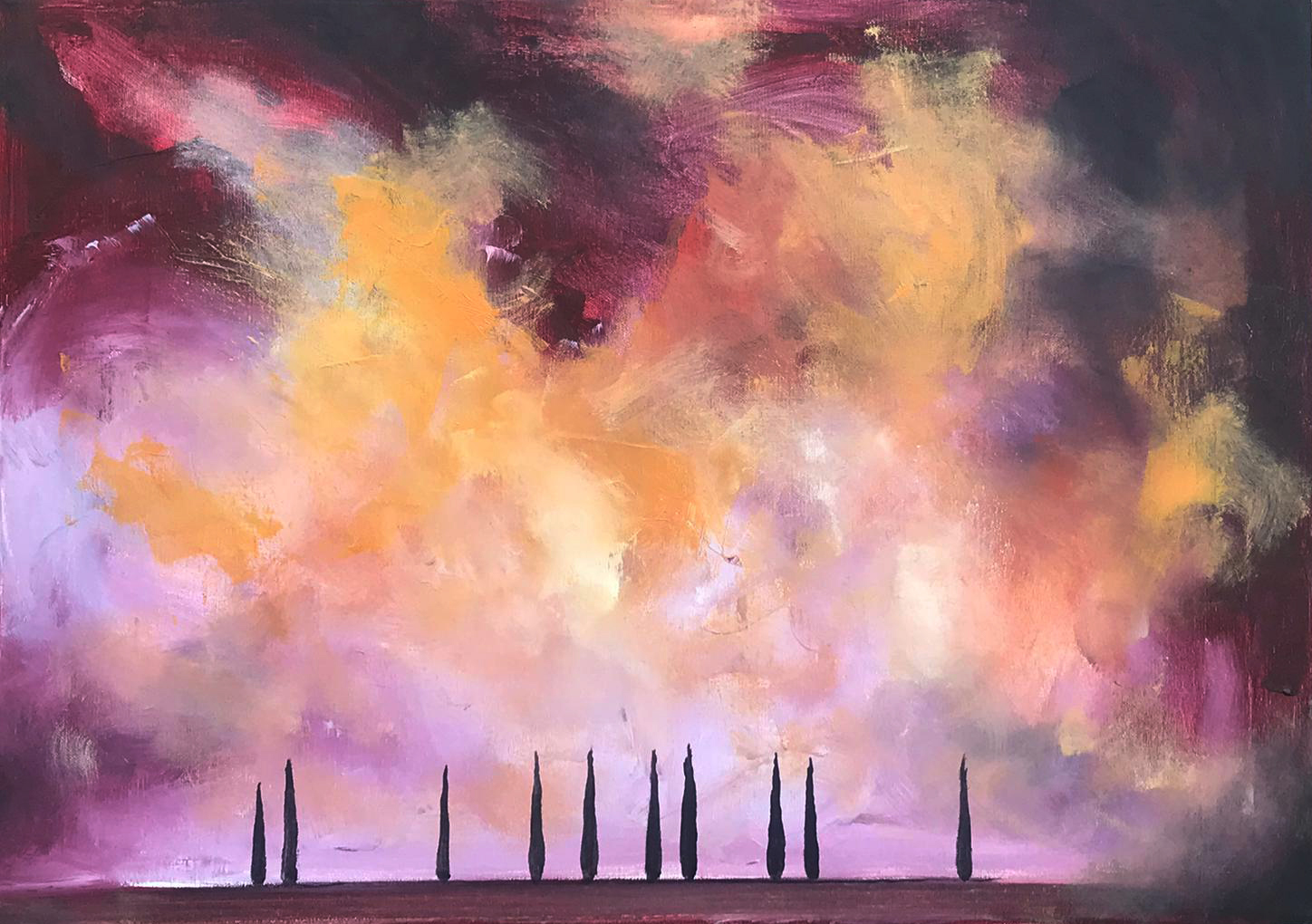
Matteo Ciampica - Aphonia 11188111 - 2010 - Olio su tela - 60 X 40


Zum Raum wird hier die Zeit
Time here becomes Space
(Richard Wagner - Parsifal - 1882)


Up ↑  


I AM WHERE YOU ARE

I AM WHERE
YOU ARE

More and more people are transporting my artworks from one city to another, traveling together all over the world. More and more people are writing to tell me about their emotions. In doing so, they become witnesses of a rediscovered time, an opportune time that generates solidarity and dialogue between human beings. Your testimony tells of an art rooted in existence, which permeates everyday life. Your participation expresses the need to find oneself in small gestures, in a brief understanding between strangers, in a simple painting to share. Your actions transform my art into an affirmation of life, into a critical presence in the world. Overcoming is built in interaction. Thank you for participating in my initiatives, your testimonies are the greatest reward for me. Thus, even my time in this world acquires a small meaning. Thank you again.

I AM WHEN YOU ARE

I AM WHEN
YOU ARE
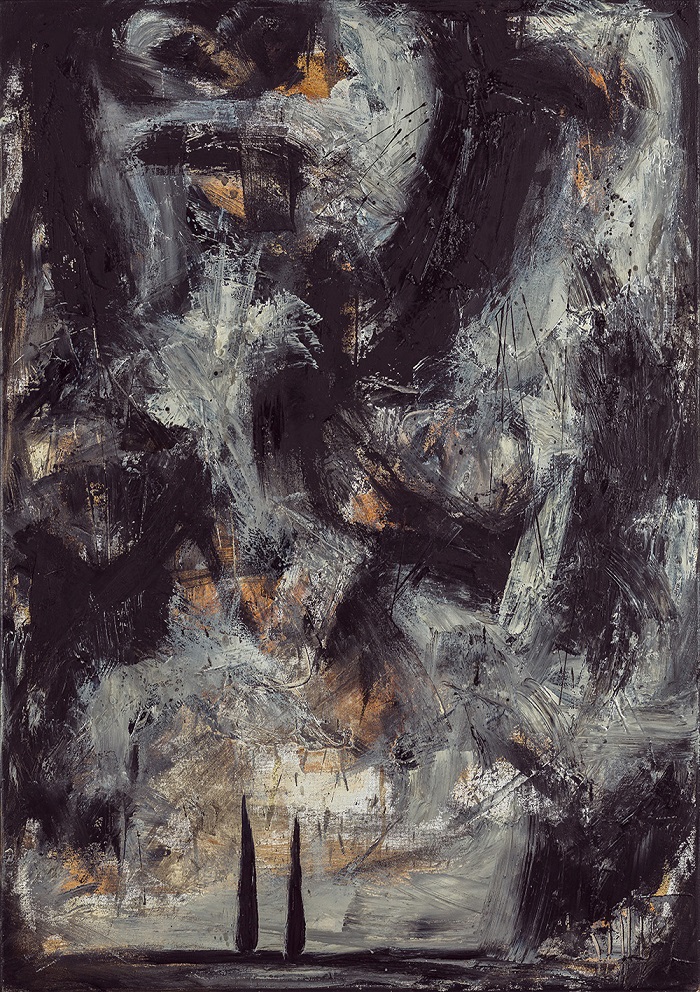


Matteo Ciampica - Aphonia 6664
2000 - Olio su tela - 70 X 50
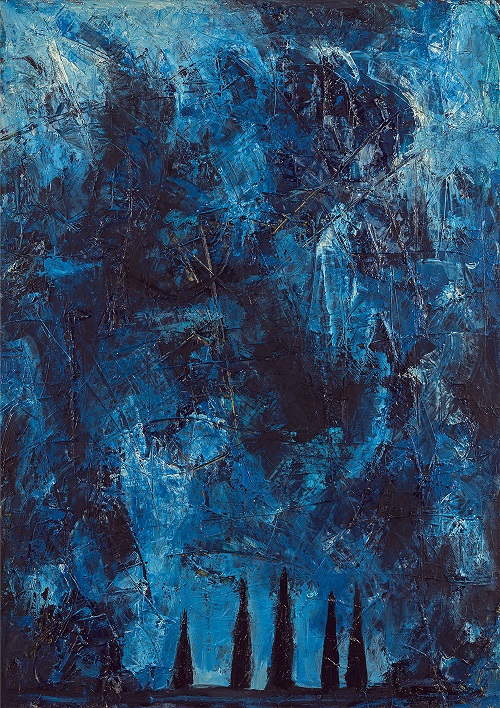


Matteo Ciampica - Aphonia 83
2009 - Olio su tela - 70 X 50
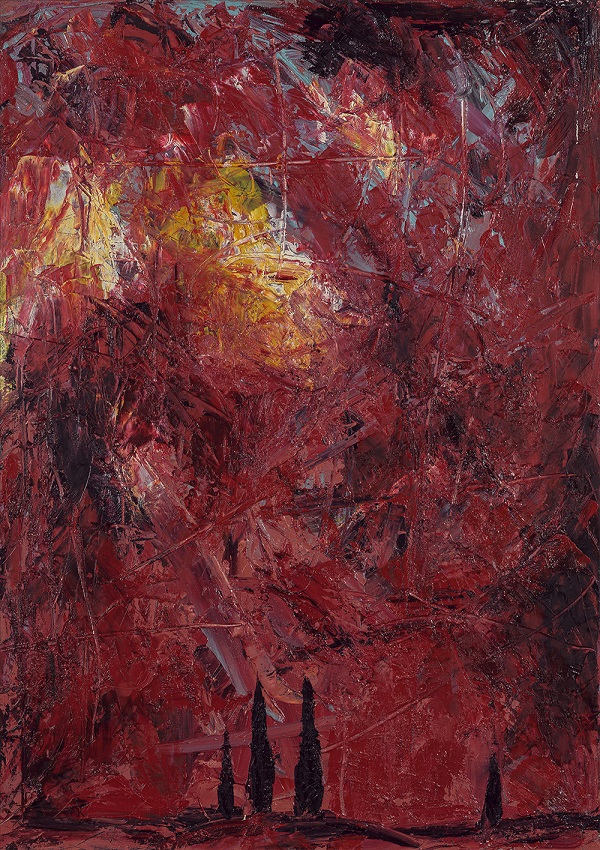


Matteo Ciampica - Aphonia 55732
2013 - Olio su tela - 70 X 50
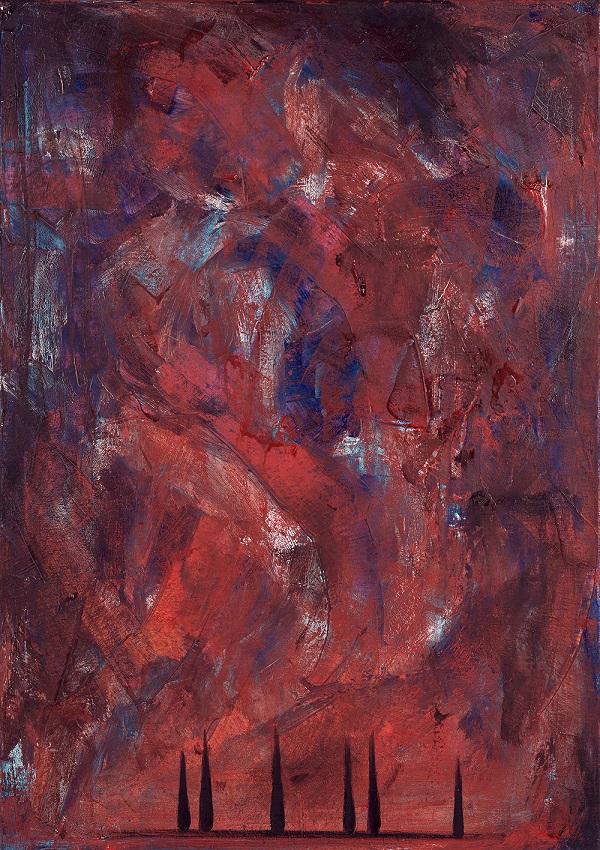


Matteo Ciampica - Aphonia 8752
2022 - Olio su tela - 70 X 50
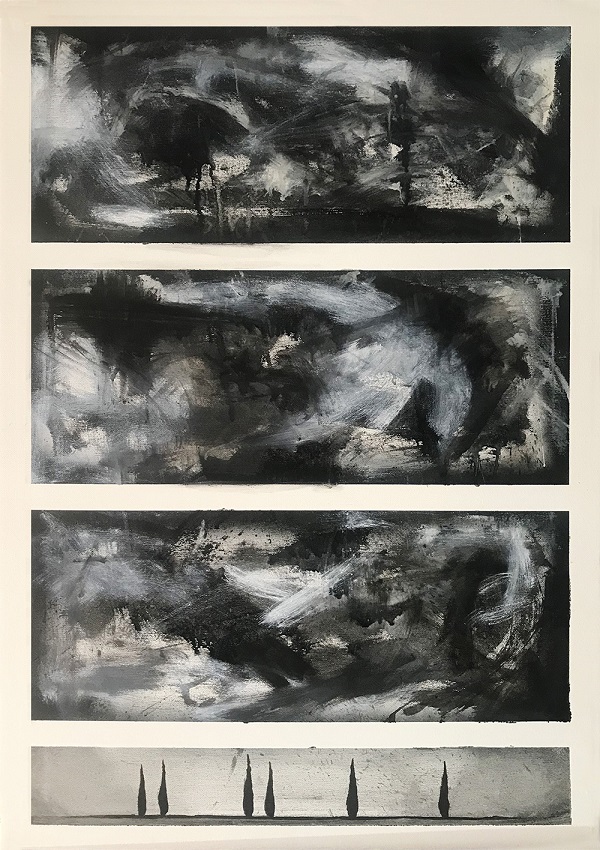

Matteo Ciampica - Aphonia ---
--- - Olio su tela - 70 X 50
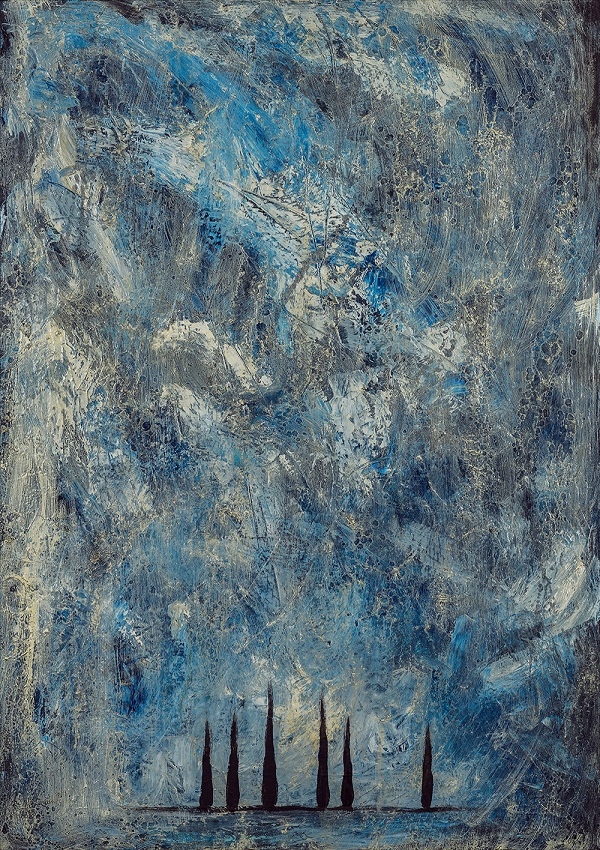

Matteo Ciampica - Aphonia 8383
2017 - Olio su tela - 70 X 50


Matteo Ciampica - Aphonia 6664
2000 - Olio su tela - 70 X 50


Matteo Ciampica - Aphonia 83
2009 - Olio su tela - 70 X 50


I AM WHERE YOU ARE

I AM WHERE
YOU ARE

More and more people are transporting my artworks from one city to another, traveling together all over the world. More and more people are writing to tell me about their emotions. In doing so, they become witnesses of a rediscovered time, an opportune time that generates solidarity and dialogue between human beings. Your testimony tells of an art rooted in existence, which permeates everyday life. Your participation expresses the need to find oneself in small gestures, in a brief understanding between strangers, in a simple painting to share. Your actions transform my art into an affirmation of life, into a critical presence in the world. Overcoming is built in interaction. Thank you for participating in my initiatives, your testimonies are the greatest reward for me. Thus, even my time in this world acquires a small meaning. Thank you again.

I AM WHEN YOU ARE

I AM WHEN
YOU ARE


Media


Contatti
The only way to contact Matteo Ciampica directly is to write an email to this address.
You can write in any language.
We will reply to you as soon as possible.

Please do not write to this address to request Authentications or information on Authentications. The only way to request an Authentication is to fill out the appropriate form in the Authentications section of this site. We will not respond to requests about Authentications sent to this email.

info@matteociampica.com


Thank you for giving me your time


Authentication

Do you want to request a certificate of authenticity for an Artwork by Matteo Ciampica?
  • You must fill out the form below in all sections, providing correct and complete information.
  • ---
  • ---
  • ---
  • ---
  • ---