About

Catharsis   - Incipit - Form - When?

Catharsis   - Incipit - Form - When?

I remember a deep anguish. A paralyzing anxiety, cold, dull, close to suffering. The walls, the room, the furniture, the entire house, everything around me was hostile. I ran down the stairs, as if fleeing from a danger. I rushed into the study, threw open the door and saw them, all there, one on top of the other, piled up like corpses in war. At that precise moment my limits, my mistakes, my fears became clear to me.
A new perception of Time stood clearly between me and them, in every different configuration.
It was then that I understood.

A decades-long tragedy was mutating my dialogue with the world.

«Tragedy therefore is the mimesis of a serious and accomplished action in itself [...] in a dramatic and non-narrative form; which, through a series of events that arouse pity and terror, has the effect of relieving and purifying the soul from such passions.»
(Aristotele, Poetica, 6, 1449b 24-28 - Our unofficial translation for citation purposes)


My Kάθαρσις (catharsis) and my Kαιρός (kairos).
I understood that I had to free them.

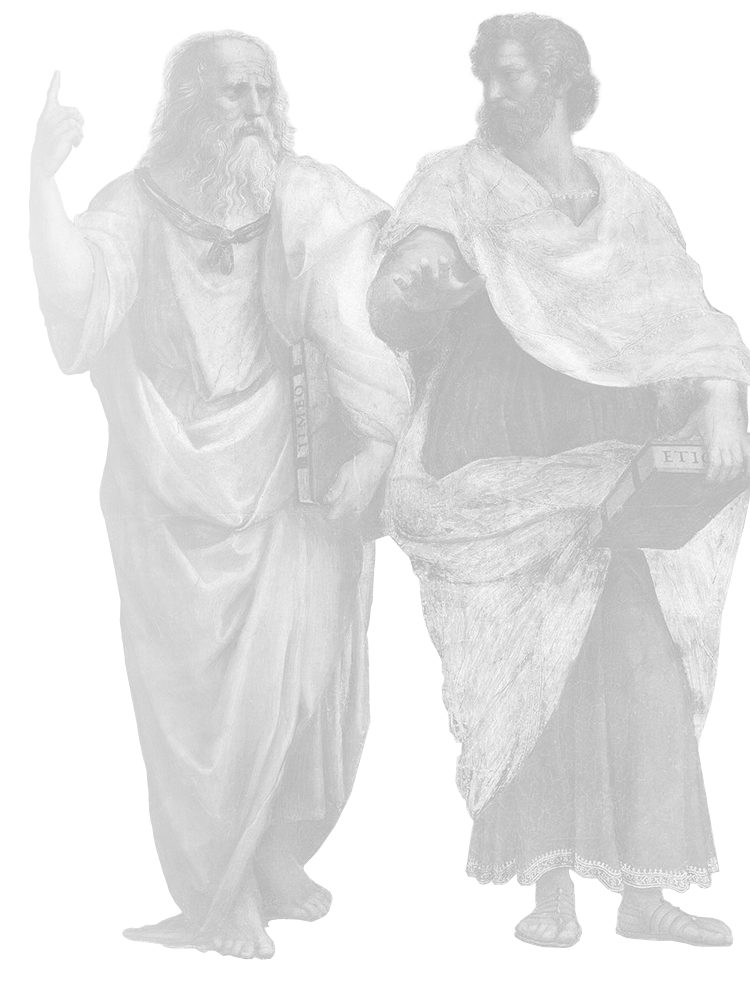
Aristotele e Platone
Raffaello Sanzio - Estratto da "La Scuola di Atene"
1509 - 1511 - Affresco - 5 m X 7,7 m - Stanze Vaticane


About

Catharsis   - Incipit - Form - When?

Catharsis   - Incipit - Form - When?

I remember a deep anguish. A paralyzing anxiety, cold, dull, close to suffering. The walls, the room, the furniture, the entire house, everything around me was hostile. I ran down the stairs, as if fleeing from a danger. I rushed into the study, threw open the door and saw them, all there, one on top of the other, piled up like corpses in war. At that precise moment my limits, my mistakes, my fears became clear to me.
A new perception of Time stood clearly between me and them, in every different configuration.
It was then that I understood.

A decades-long tragedy was mutating my dialogue with the world.

«Tragedy therefore is the mimesis of a serious and accomplished action in itself [...] in a dramatic and non-narrative form; which, through a series of events that arouse pity and terror, has the effect of relieving and purifying the soul from such passions.»
(Aristotele, Poetica, 6, 1449b 24-28 - Our unofficial translation for citation purposes)


My Kάθαρσις (catharsis) and my Kαιρός (kairos).
I understood that I had to free them.


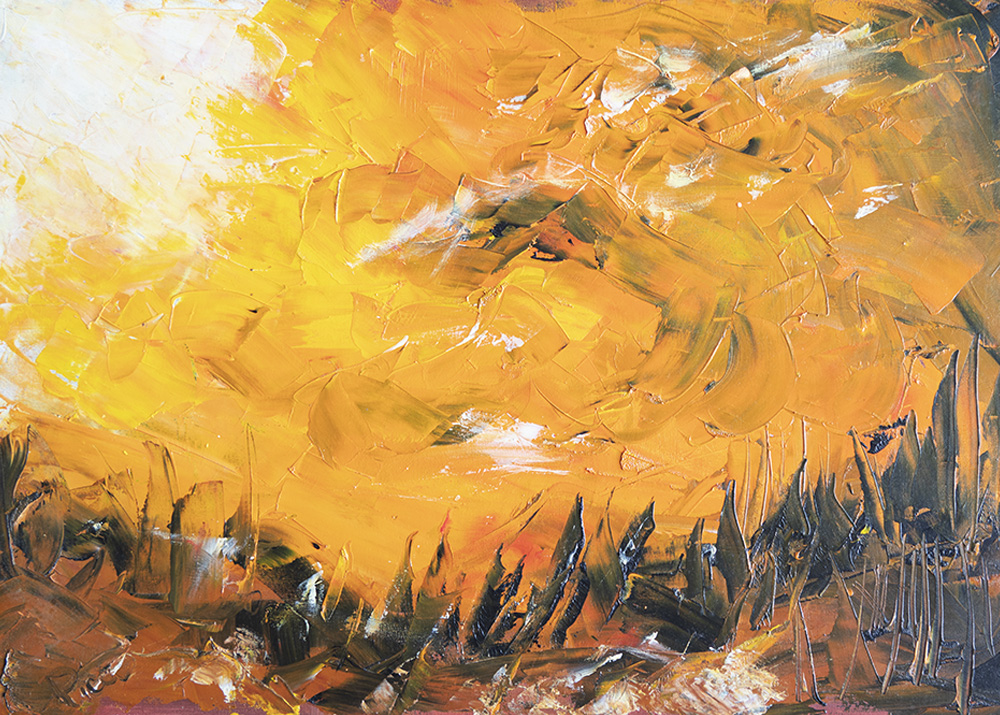
Matteo Ciampica - Senza Titolo
1989 - Olio su tela - 120 X 140
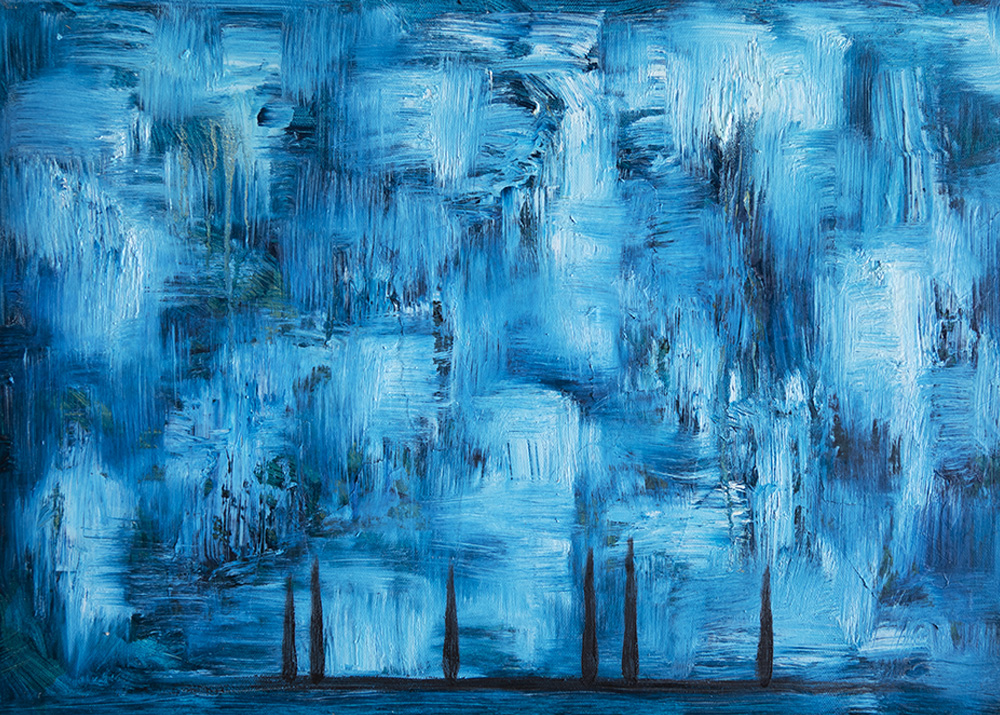


Matteo Ciampica - Aphonia 2488
1999 - Olio su tela - 100 X 120
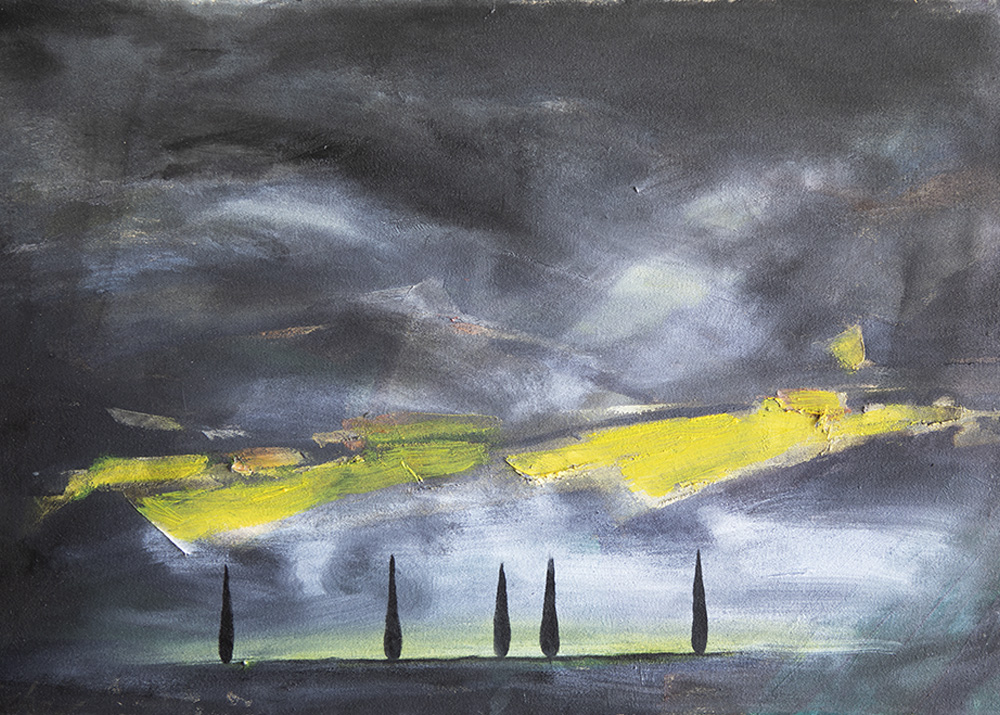


Matteo Ciampica - Aphonia 222286
2023 - Olio su tela - 100 X 120
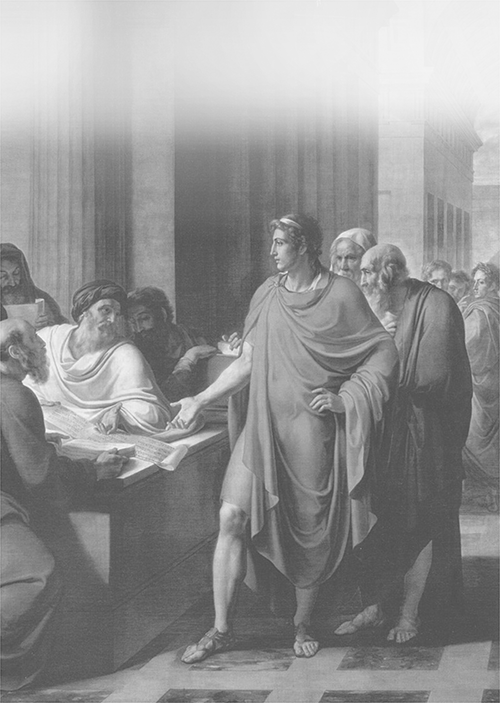


Vincenzo Camuccini - Estratto da "Tolomeo Filadelfo nella Biblioteca di Alessandria" - 1813 - Napoli, Museo nazionale di Capodimonte

Catharsis -   Incipit   - Form - When?

Catharsis -   Incipit   - Form - When?

I was 9 years old when I got my hands on my first art book, I was at a friends's house with my parents. It was the day art became an inseparable part of my existence. Even today I feel the great confusion that crossed my soul as a child. I leafed through those pages endlessly, wrapped in an indefinite bewilderment, looking for a meaning that I could not find. It was a text about Picasso. It took me several years to understand the greatness of this man and perhaps, even today, many questions escape me. I am certain, however, that the three works The Old Blind Guitarist, Woman Crying and The Life shook my spirit like nothing before. In this brief window of time are the roots of my call to the unsaid, to everything I spread on the canvas beyond what is visible to the eye.

Art shakes the dust accumulated in everyday life from the soul.
(Pablo Picasso - Attribution widespread in aphoristic collections of the 20th century -- Our unofficial translation for citation purposes)


Many years later I went in search of that text, bought it, and still today I reread it with scruple. It tells me new stories every time, the narration grows over time, in step with my investigation, between neglected ambiguities and new constructions of meaning. I have the same feeling for all the books that have accompanied me along the way, for all the works in which I have immersed myself.

The artwork is a fundamentally ambiguous message, a plurality of meanings that coexist in a single signifier
(Umberto Eco - Opera aperta, Bompiani, Milano, 1962 -- Our unofficial translation for citation purposes)

Language operates entirely in ambiguity, and most of the time you know absolutely nothing of what you say.
(Jacques Lacan - Il Seminario. Libro XX. Ancora (1972–1973), Einaudi, Torino -- Our unofficial translation for citation purposes)

Ambiguity is a value in art and a serious flaw in love.
(Fabrizio Caramagna - aphorism - web publications -- Our unofficial translation for citation purposes)


That day my research began.
My temporal defragmentation.
My hunger for other people's gazes.
My splendid obsession.

Catharsis -   Incipit   - Form - When?

Catharsis -   Incipit   - Form - When?

I was 9 years old when I got my hands on my first art book, I was at a friends's house with my parents. It was the day art became an inseparable part of my existence. Even today I feel the great confusion that crossed my soul as a child. I leafed through those pages endlessly, wrapped in an indefinite bewilderment, looking for a meaning that I could not find. It was a text about Picasso. It took me several years to understand the greatness of this man and perhaps, even today, many questions escape me. I am certain, however, that the three works The Old Blind Guitarist, Woman Crying and The Life shook my spirit like nothing before. In this brief window of time are the roots of my call to the unsaid, to everything I spread on the canvas beyond what is visible to the eye.

Art shakes the dust accumulated in everyday life from the soul.
(Pablo Picasso - Attribution widespread in aphoristic collections of the 20th century -- Our unofficial translation for citation purposes)


Many years later I went in search of that text, bought it, and still today I reread it with scruple. It tells me new stories every time, the narration grows over time, in step with my investigation, between neglected ambiguities and new constructions of meaning. I have the same feeling for all the books that have accompanied me along the way, for all the works in which I have immersed myself.

The artwork is a fundamentally ambiguous message, a plurality of meanings that coexist in a single signifier
(Umberto Eco - Opera aperta, Bompiani, Milano, 1962 -- Our unofficial translation for citation purposes)

Language operates entirely in ambiguity, and most of the time you know absolutely nothing of what you say.
(Jacques Lacan - Il Seminario. Libro XX. Ancora (1972–1973), Einaudi, Torino -- Our unofficial translation for citation purposes)

Ambiguity is a value in art and a serious flaw in love.
(Fabrizio Caramagna - aphorism - web publications -- Our unofficial translation for citation purposes)


That day my research began.
My temporal defragmentation.
My hunger for other people's gazes.
My splendid obsession.


Matteo Ciampica - Aphonia 6772
2023 - Olio su tela - 50 X 70
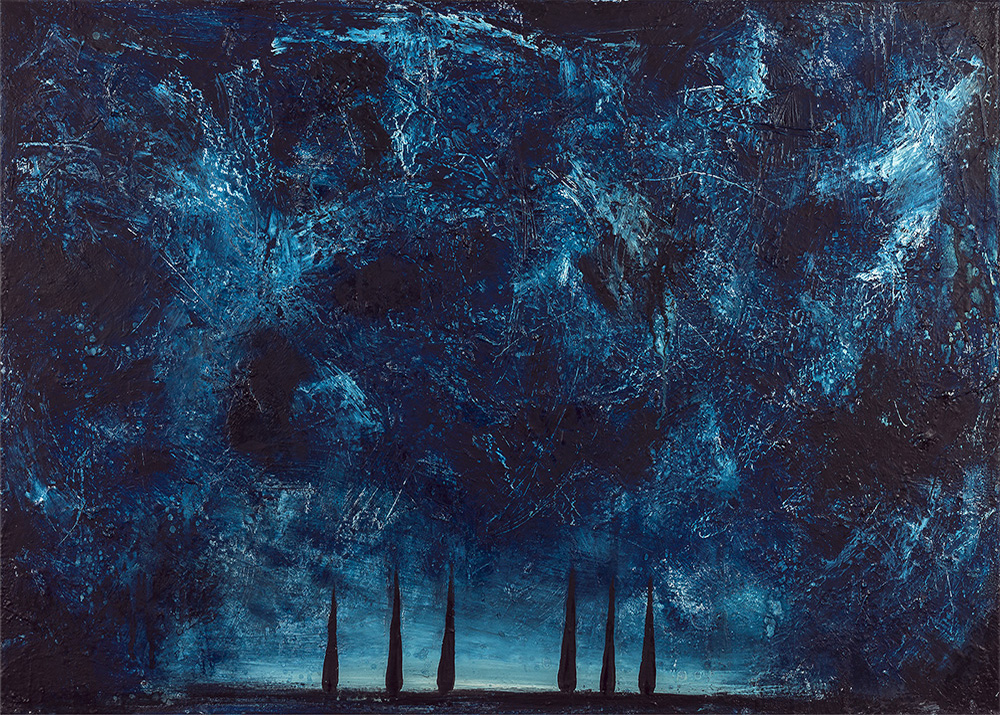


Matteo Ciampica - Aphonia 598
2021 - Olio su tela - 50 X 70
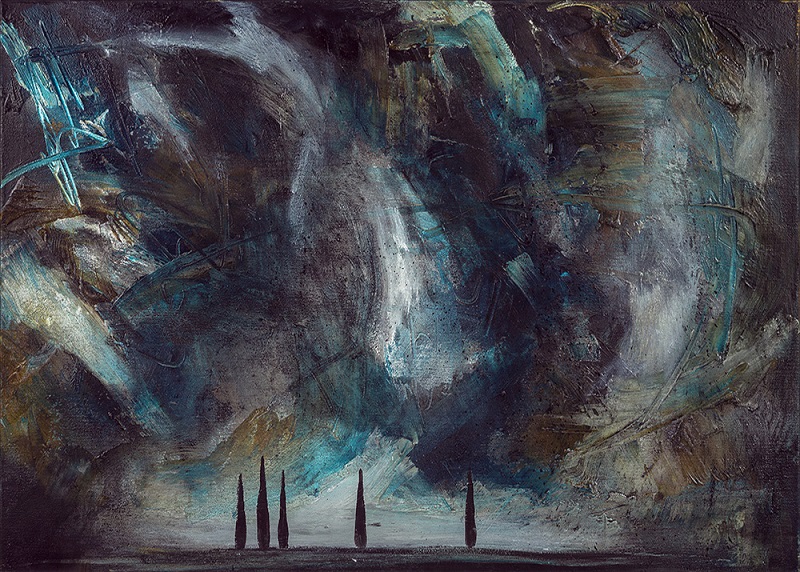


Matteo Ciampica - Aphonia 5476
2022 - Olio su tela - 50 X 70
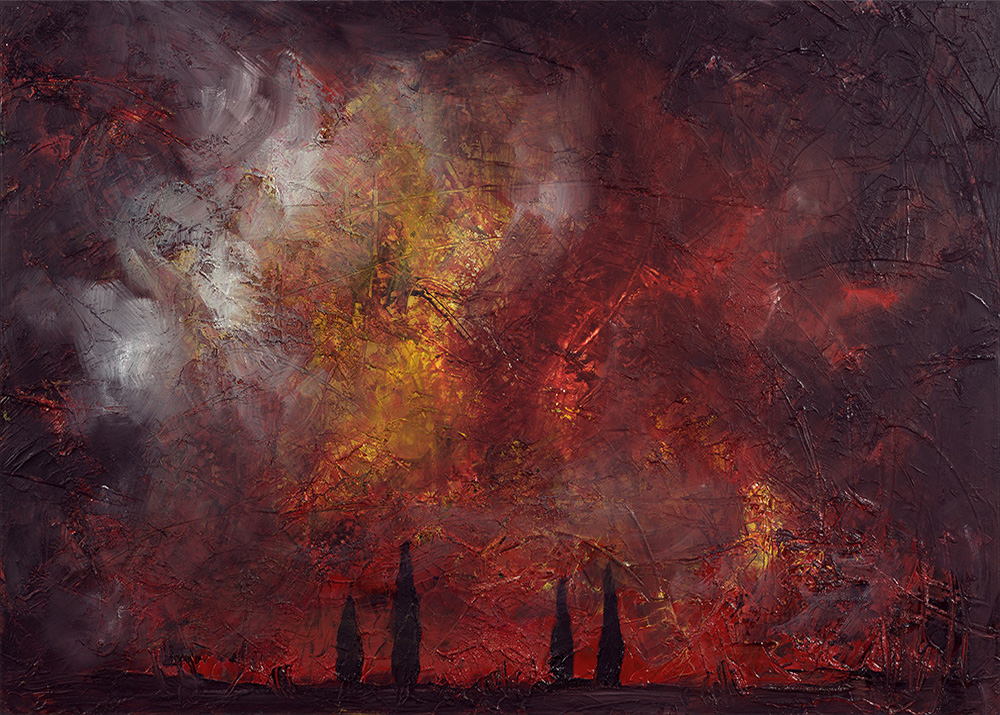


Matteo Ciampica - Aphonia 7591
2013 - Olio su tela - 50 X 70
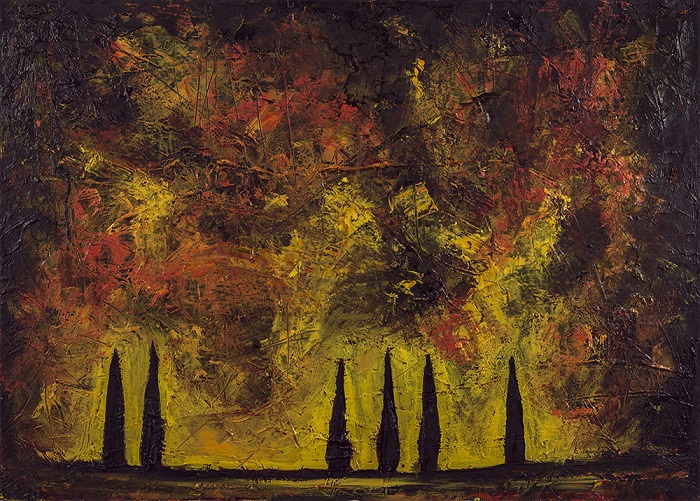


Matteo Ciampica - Aphonia 985
2022 - Olio su tela - 50 X 70
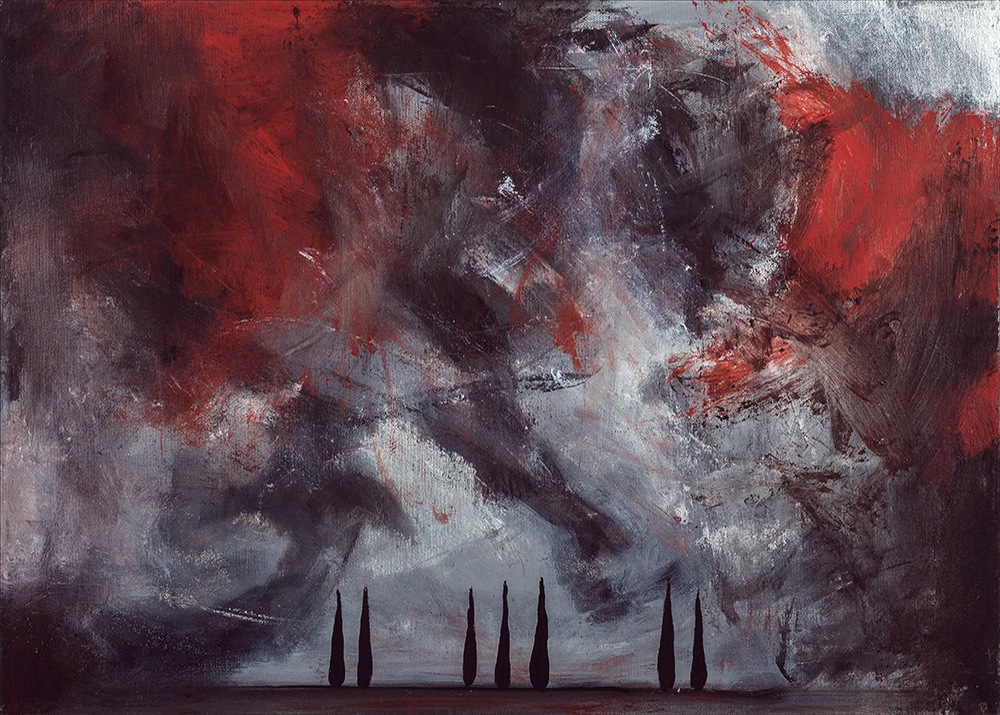


Matteo Ciampica - Aphonia 19912
2023 - Olio su tela - 50 X 70


Catharsis - Incipit -   Form   - When?

Catharsis - Incipit -   Form   - When?

I moulded the matter to investigate the Shape of Time, the plurality of an instant, how becoming passes through it, shapes it, bends it, determines it as a fragment. I fixed the subject so as not to lose myself, or at least I thought I did. I represented it infinite times, for infinite conferrals of meaning, infinite extractions of sense, I captured it in infinite poses, I conveyed its essence for infinite deconstructions, I generated the multitude in the perseverance of action. I ceaselessly extract every possible configuration from that single, ever-changing instant, I reconstruct its volume, surface, envelope, plane, wave, and boundary countless times, I renew its purpose, and I cast it into the world.
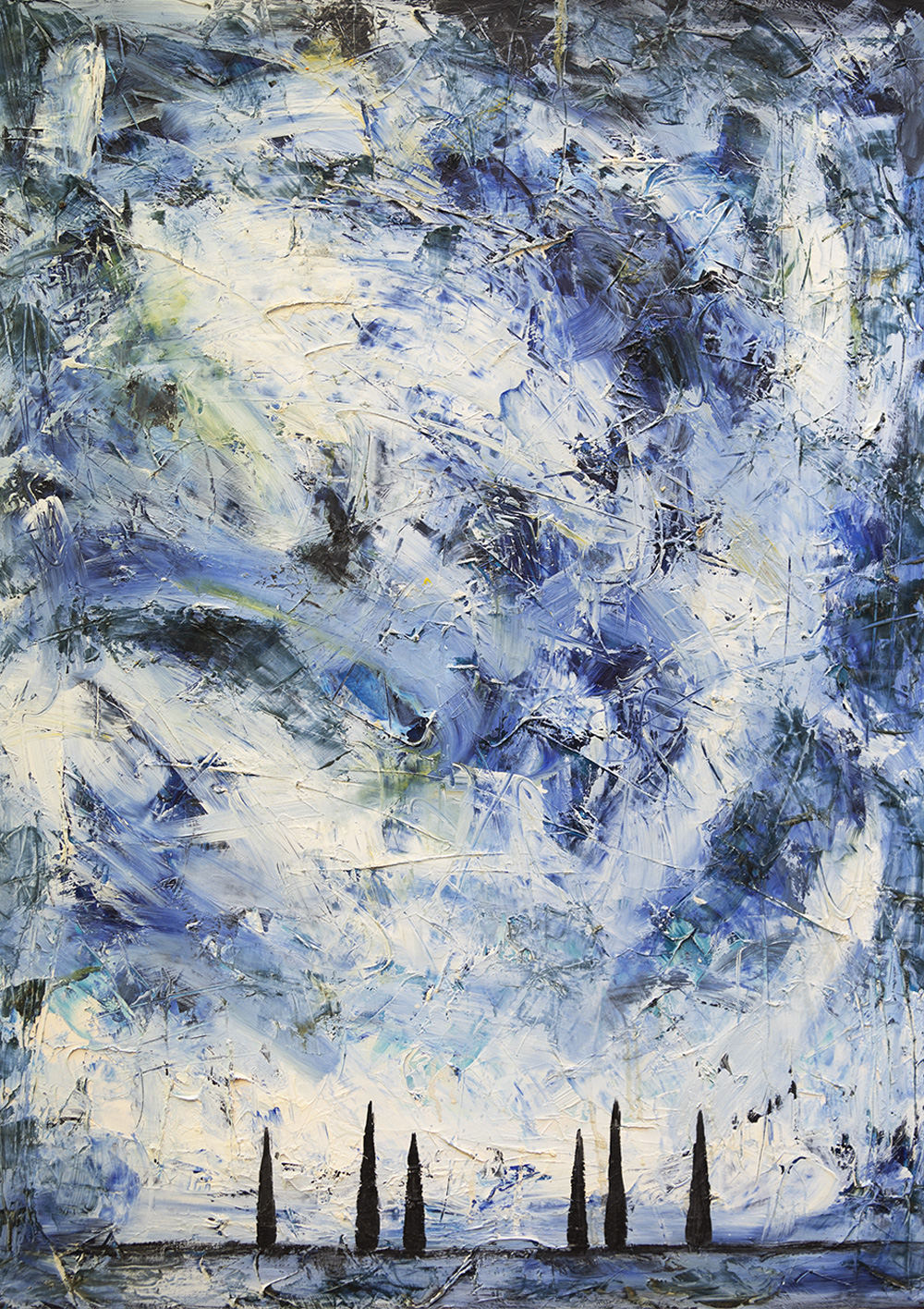
The Form of Time remains for me the last unintelligible mystery.
The continuous request for comparison.

All living beings are different phenomena of a single universal substance; they draw from the same metaphysical root, and their difference is quantitative, not qualitative.
(Giordano Bruno - De la causa, principio et uno, 1584 – paraphrase -- Our unofficial translation for citation purposes)


The cyclical Time of the ancient Greek world, the linear Time of the Judeo-Christian tradition, the disjointed Time of the contemporary era. I see a connection between the articulations of the Forms that change, without overall resolution. The content is not exhausted, it escapes, transmutes, returns under new guises, revealing other identities. An obsession that has lasted for over thirty years, in which every effort is aimed at demolishing the fixed rules through which the mind orders manifest matter.
Time becomes the son of Form.
Randomness collapses.

One must redo ten times, a hundred times the same subject. Nothing in art should seem due to chance.
(Edgar Degas - Lettres et écrits, a cura di Paul-André Lemoisne, Paris, 1945 -- Our unofficial translation for citation purposes)


How to extract the essence of this incessant reconfiguration? How to bring a precise When into the world through a specific Form?
The answer was in plurality.
My artworks are lenses focused on the world, revealing its thickness.

Since this famous content has no other means of expression than the Form, it should be obvious by now that art is all in the Form! And since it is now also clear that Form is inseparable from its content, it will never be possible to flaunt, as is done today, a content without resulting in an ostentatious Form.
(Matteo Marangoni - Saper vedere, Vallecchi, Firenze, 1927 -- Our unofficial translation for citation purposes)


Matteo Ciampica - Aphonia 3784
2018 - Olio su tela - 80 X 60


Matteo Ciampica - Aphonia 83
2016 - Olio su tela - 80 X 60
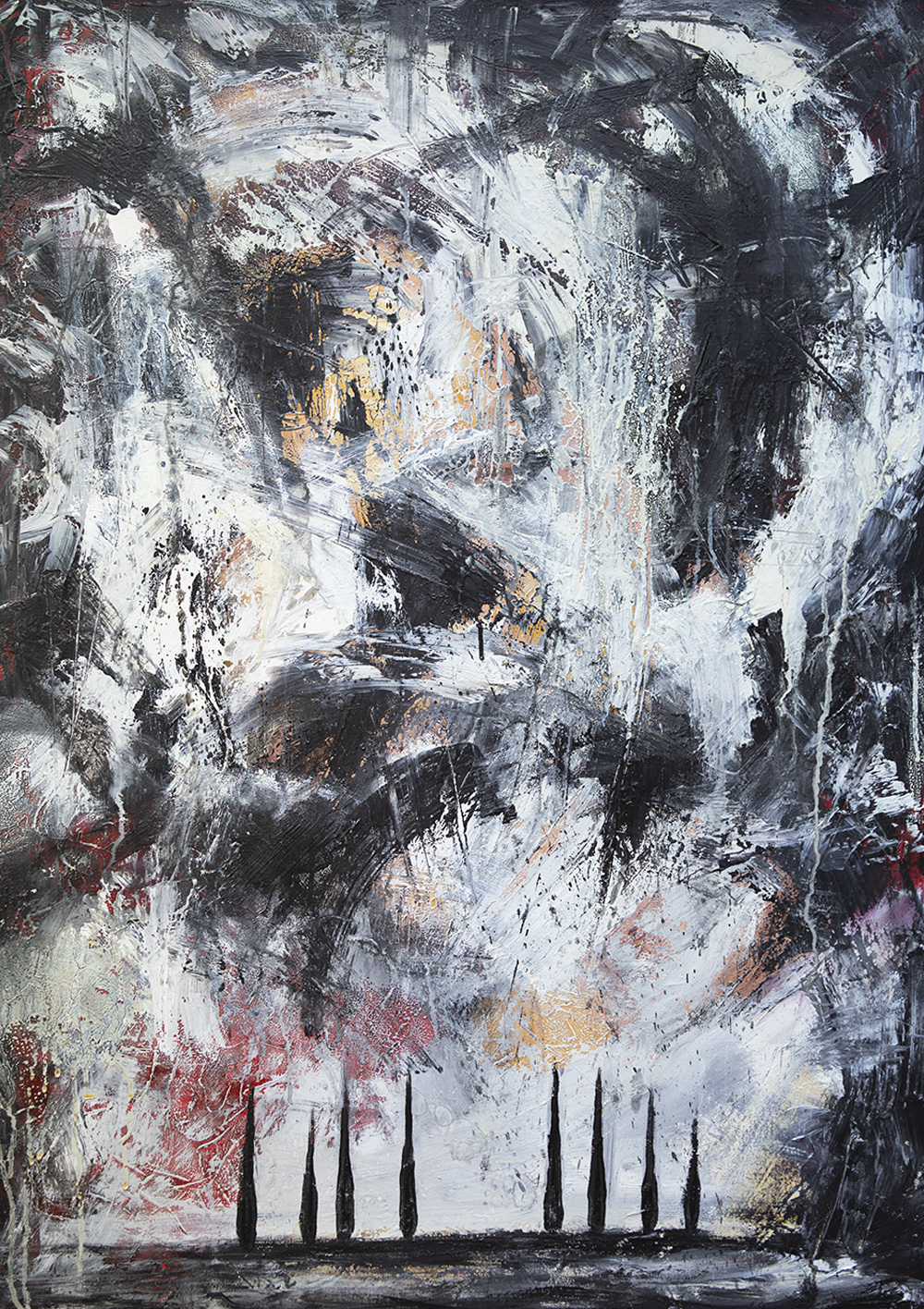


Matteo Ciampica - Aphonia 66622
2018 - Olio su tela - 80 X 60


Catharsis - Incipit - Form -   When?

Catharsis - Incipit - Form -   When?

There is no beginning or end in the Form.
The Time is the only answer, the When is the only question.
The meaning of a Artwork is in its summation with all the others.

Nomen omen – The name is an omen
(Tito Maccio Plauto, Persa, 625).


TEXT LOADING…
IF THE TEXT DOES NOT APPEAR IN A FEW SECONDS, CHECK THAT COOKIES ARE ACTIVATED AND RELOAD THE PAGE.
THANK YOU AND HAPPY READING

Evolution knows beginning and end, birth and death, from which the Form is immune. As the form of man was before birth and will be after death, so a historical form is, in its deep core, independent of time and the circumstances from which it seems to spring. The means it uses are nobler, its fruitfulness is immediate. History does not produce forms, but is modified by virtue of the form.
(Ernst Jünger - L’Operaio. Dominio e forma, Guanda 1932 -- Der Arbeiter. Herrschaft und Gestalt, Hamburg, 1932 -- Our unofficial translation for citation purposes)


With my research I scrutinize the incessant scream of Time, I generate a new When every time I lash a stroke of color, every painting remains incomplete by definition, it is here in space and everywhere in the instant.
The meaning of a Artwork is in the summation of every twist impressed on the color, which transposes infinite Whens into a single deceptive vision.
The Research is the only truth, the Time the only condition of such truth, the Form that contains the extraction of a meaning its only expression.
The Form is the vehicle of every When.

The artist does not deliver the truth, he delivers his truth, his hypothesis of reality.
(Emilio Vedova - Statements in interviews collected in catalogues and writings, years ’60–’80 -- Our unofficial translation for citation purposes)


Unable to define, I continue to represent the same infinite instant that changes in the multiplicity of the conferrals of meaning.

The author in his work should be like God in the universe, present everywhere and visible nowhere.
(Gustave Flaubert - Lettera a Louise Colet, 9 dicembre 1852 -- Our unofficial translation for citation purposes)


And you? When are you?

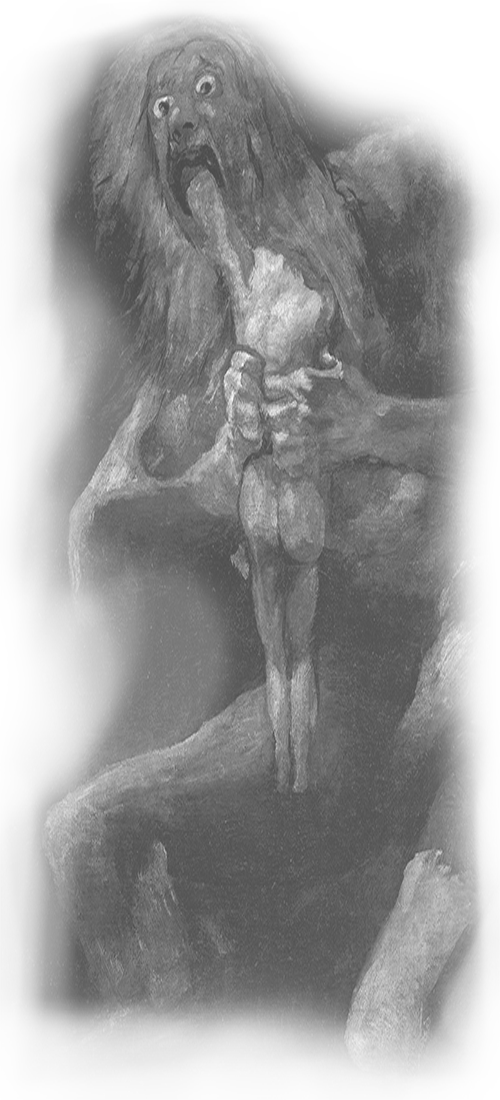
Francisco Goya - Estratto da "Saturno che divora i suoi figli" - 1820 - Madrid, Museo del Prado


Up ↑  

Catharsis - Incipit - Form -   When?

Catharsis - Incipit - Form -   When?

There is no beginning or end in the Form.
The Time is the only answer, the When is the only question.
The meaning of a Artwork is in its summation with all the others.

Nomen omen – The name is an omen
(Tito Maccio Plauto, Persa, 625).


TEXT LOADING…
IF THE TEXT DOES NOT APPEAR IN A FEW SECONDS, CHECK THAT COOKIES ARE ACTIVATED AND RELOAD THE PAGE.
THANK YOU AND HAPPY READING

Evolution knows beginning and end, birth and death, from which the Form is immune. As the form of man was before birth and will be after death, so a historical form is, in its deep core, independent of time and the circumstances from which it seems to spring. The means it uses are nobler, its fruitfulness is immediate. History does not produce forms, but is modified by virtue of the form.
(Ernst Jünger - L’Operaio. Dominio e forma, Guanda 1932 -- Der Arbeiter. Herrschaft und Gestalt, Hamburg, 1932 -- Our unofficial translation for citation purposes)


With my research I scrutinize the incessant scream of Time, I generate a new When every time I lash a stroke of color, every painting remains incomplete by definition, it is here in space and everywhere in the instant.
The meaning of a Artwork is in the summation of every twist impressed on the color, which transposes infinite Whens into a single deceptive vision.
The Research is the only truth, the Time the only condition of such truth, the Form that contains the extraction of a meaning its only expression.
The Form is the vehicle of every When.

The artist does not deliver the truth, he delivers his truth, his hypothesis of reality.
(Emilio Vedova - Statements in interviews collected in catalogues and writings, years ’60–’80 -- Our unofficial translation for citation purposes)


Unable to define, I continue to represent the same infinite instant that changes in the multiplicity of the conferrals of meaning.

The author in his work should be like God in the universe, present everywhere and visible nowhere.
(Gustave Flaubert - Lettera a Louise Colet, 9 dicembre 1852 -- Our unofficial translation for citation purposes)


And you? When are you?


I AM WHERE YOU ARE

I AM WHERE
YOU ARE

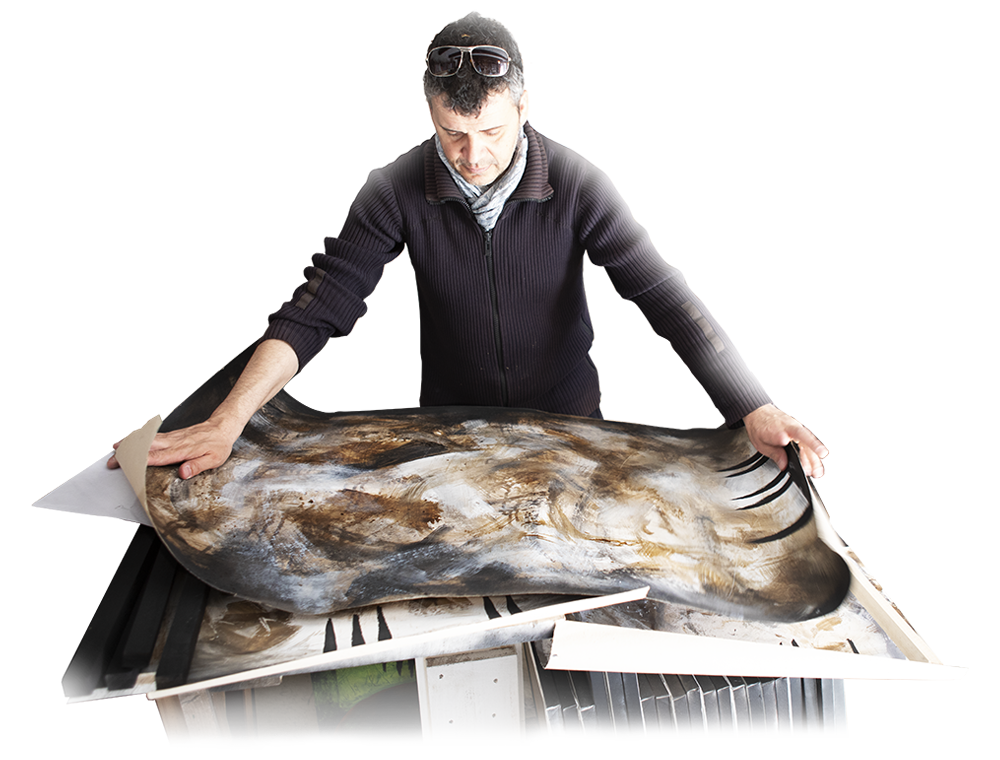
More and more people are transporting my artworks from one city to another, traveling together all over the world. More and more people are writing to tell me about their emotions. In doing so, they become witnesses of a rediscovered time, an opportune time that generates solidarity and dialogue between human beings. Your testimony tells of an art rooted in existence, which permeates everyday life. Your participation expresses the need to find oneself in small gestures, in a brief understanding between strangers, in a simple painting to share. Your actions transform my art into an affirmation of life, into a critical presence in the world. Overcoming is built in interaction. Thank you for participating in my initiatives, your testimonies are the greatest reward for me. Thus, even my time in this world acquires a small meaning. Thank you again.

I AM WHEN YOU ARE

I AM WHEN
YOU ARE
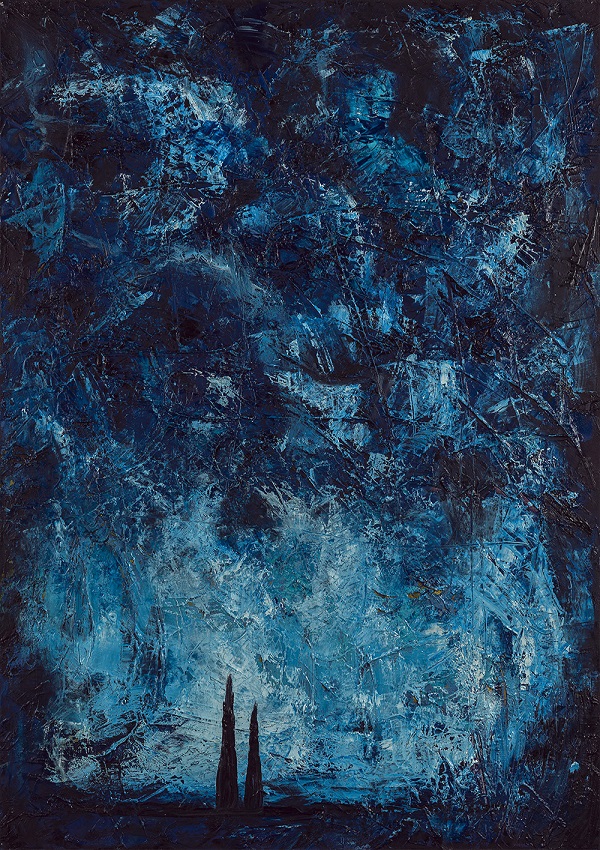

Matteo Ciampica - Aphonia 11875
2020 - Olio su tela - 70 X 50
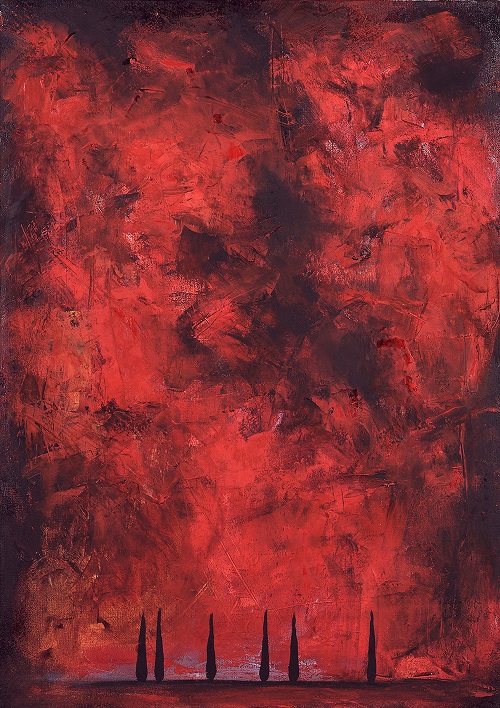


Matteo Ciampica - Aphonia 5575
2023 - Olio su tela - 70 X 50
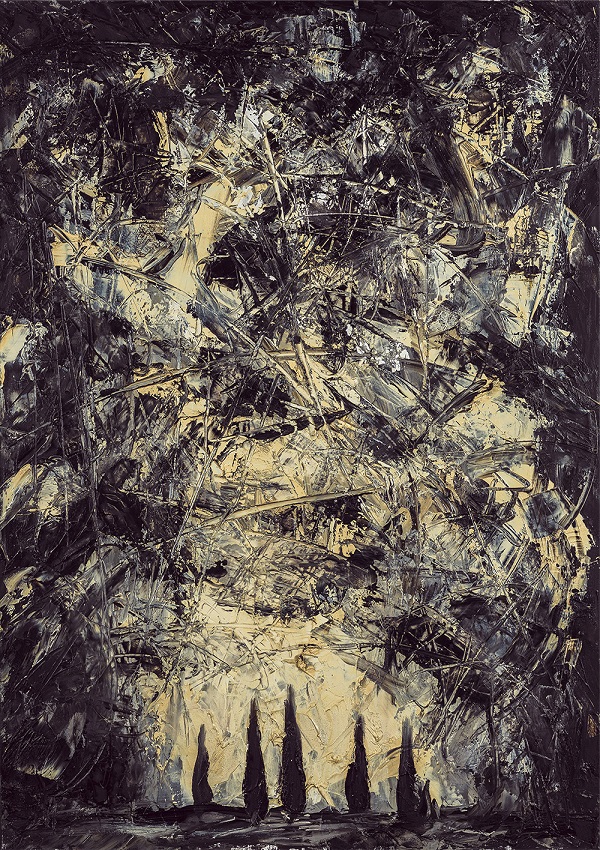


Matteo Ciampica - Aphonia 91813
2014 - Olio su tela - 70 X 50
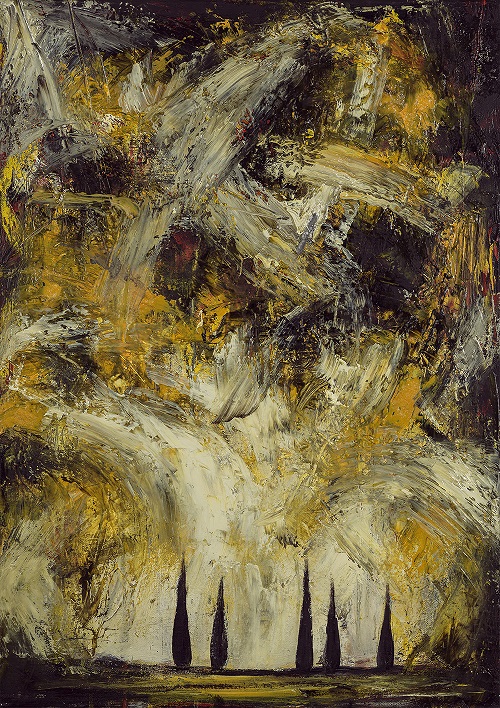


Matteo Ciampica - Aphonia 56641
2018 - Olio su tela - 70 X 50
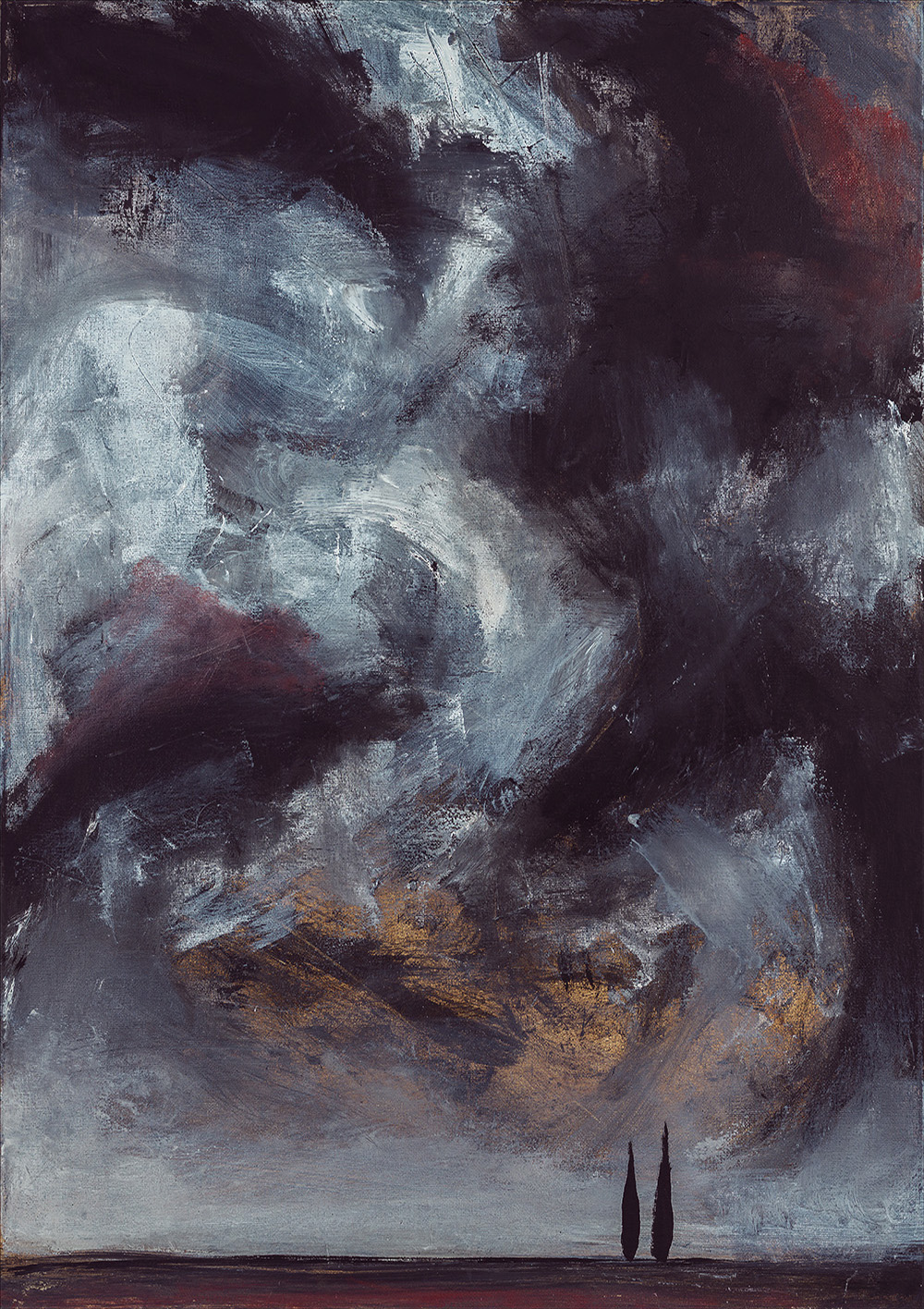


Matteo Ciampica - Aphonia 589
2023 - Olio su tela - 70 X 50
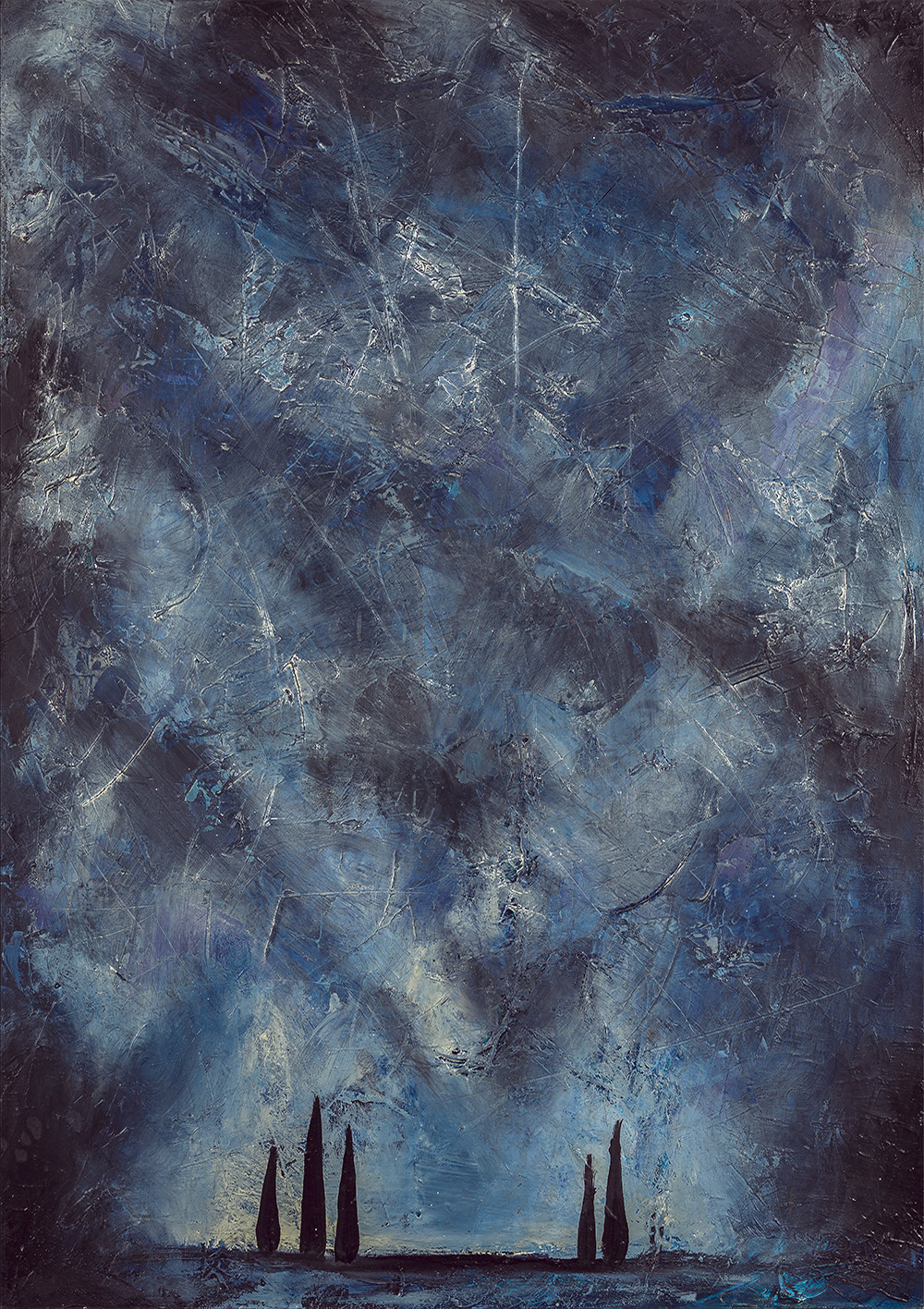


Matteo Ciampica - Aphonia 92
2012 - Olio su tela - 70 X 50
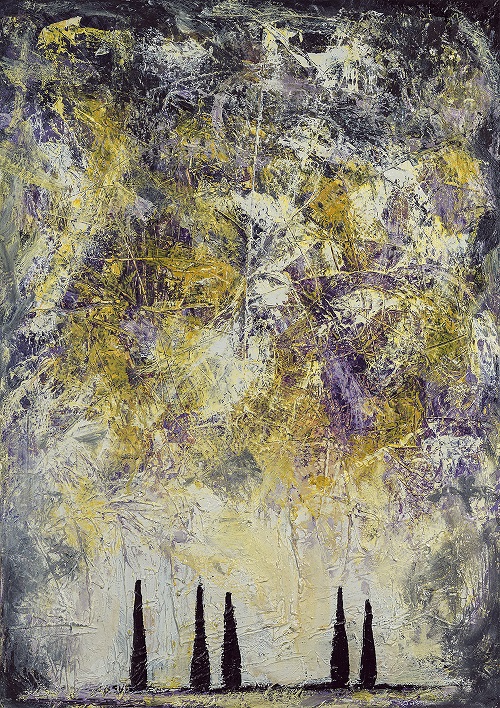


Matteo Ciampica - Aphonia 345622
2018 - Olio su tela - 70 X 50


I AM WHERE YOU ARE

I AM WHERE
YOU ARE

More and more people are transporting my artworks from one city to another, traveling together all over the world. More and more people are writing to tell me about their emotions. In doing so, they become witnesses of a rediscovered time, an opportune time that generates solidarity and dialogue between human beings. Your testimony tells of an art rooted in existence, which permeates everyday life. Your participation expresses the need to find oneself in small gestures, in a brief understanding between strangers, in a simple painting to share. Your actions transform my art into an affirmation of life, into a critical presence in the world. Overcoming is built in interaction. Thank you for participating in my initiatives, your testimonies are the greatest reward for me. Thus, even my time in this world acquires a small meaning. Thank you again.

I AM WHEN YOU ARE

I AM WHEN
YOU ARE


Media


Contatti
The only way to contact Matteo Ciampica directly is to write an email to this address.
You can write in any language.
We will reply to you as soon as possible.

Please do not write to this address to request Authentications or information on Authentications. The only way to request an Authentication is to fill out the appropriate form in the Authentications section of this site. We will not respond to requests about Authentications sent to this email.

info@matteociampica.com

The only way to contact Matteo Ciampica directly is to write an email to this address.
You can write in any language.
We will reply to you as soon as possible.

Please do not write to this address to request Authentications or information on Authentications. The only way to request an Authentication is to fill out the appropriate form in the Authentications section of this site. We will not respond to requests about Authentications sent to this email.

info@matteociampica.com


Thank you for giving me your time


Authentication

Do you want to request a certificate of authenticity for an Artwork by Matteo Ciampica?
  • You must fill out the form below in all sections, providing correct and complete information.
  • ---
  • ---
  • ---
  • ---
  • ---